Take a look at this:
http://beartales.me/2013/01/14/the-latest-crop-of-walmartians/
You've seen similar before, I'm sure. The comments offer a few possible explanations, poverty, mental illness, a desire to shock, and so on. There are others. So if you laugh, you should feel totally ashamed of yourself.
No, I fully agree, these are not wise clothing choices, but it doesn't hurt you, so why would you make fun of these people? That's called being a bully and it's unkind.
However, I won't think any less of you if you do react negatively to the photos. It's a rather normal thing to do. We are often surprised by really unusual things. We stare. We judge. We're human. Deep inside all of us is a 5-year-old child, after all, and they WILL shout "THAT MAN LOOKS FUNNY!" Because he does.
No, I'm not really as cross with you as I just made out to be, but I have a reason for approaching it this way.
The reason I'm sharing this at all is because of who just brought it to my attention. Somebody who is lightning fast at accusing others of judging. Somebody who will frequently be the stirrer in a broad discussion by coming in with an extreme and strict left-wing view, that's not even fully on-topic. Somebody who thinks that the political statements he makes are always, without exception, more important than the feelings of others. Somebody who, while being very fast to offer his own unsolicited opinion, is ready to pull apart the opinions of others without a second thought, based on (he claims) fairness. Self-proclaimed righteousness.
Apparently it's OK if he has a poke at these people. When challenged he justified it with the "fact" that these folk have "no self respect."
Because, you know, having no self respect is far worse than being a fucking hypocrite.
Tuesday, 10 December 2013

Advertising
I mentioned in a recent blog about the pervasive effect of advertising. Not having TV here, I have become used to a world without it. For the last two days I've been bombarded with it, and it was offensive. It was stupid (i.e. tried to be funny but wasn't), it was misleading, it was everything I dislike. I am so glad to be away from it again.
What effect is it having on people? Obviously it depends on the individual, but it must have some effect, even if you are fully aware of what it is trying to do (brainwash you.) The effect it is having on those who are unaware must be considerable.
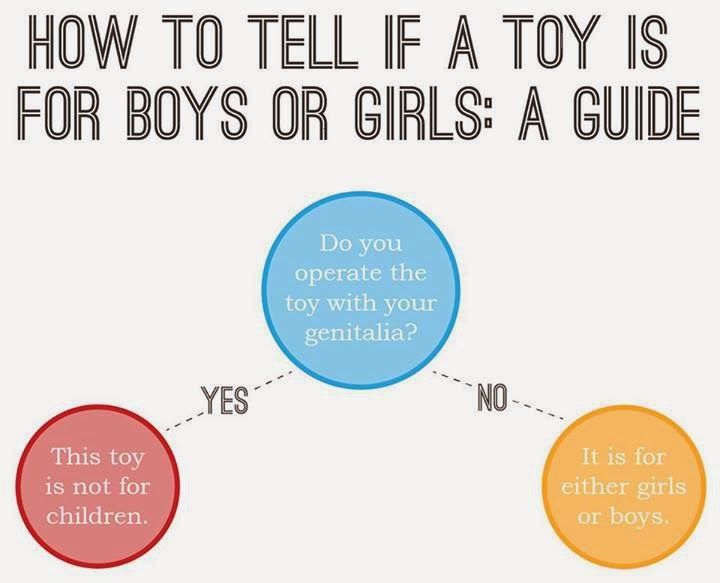
But the worst of it was on the children's channels. A relentless loud, garish display of plastic toys of the worst kind. Even the channels intended for the youngest viewers bother me. The programming itself varies. Some of it it quite good, some is rubbish. But they all have the same awful commercials. Right now of course it's aimed at Christmas gifts. How many hundreds of dollars of rubbish can you buy your kids.

There was some electronic toy, I didn't catch the name, but it seems to capture the child's face in the screen, and allow her to apply make up to it. The child in the commercial was maybe 9. At the most. The buyers will be younger. This was being shown between "toddler" shows.
I'm not opposed to technology in toys. I think some of it is wonderful. Lucian has a Doodle something or other, similar to an Etch-a-Sketch. That amused him for hours with me drawing cats and pirates, and letters and numbers. He definitely prefers it to a colouring book and crayons. Sian prefers it too - no crayon on the walls.
Everything modern has its pros and cons. I think we as those responsible for children MUST be discerning about what they watch, what they play with. It's all about MESSAGES. Does anyone pay attention to the messages kids are being given, or am I on my own here.
What I'm seeing so much is that powerful message to BUY MORE STUFF aimed as hard, if not harder at children than at adults (and it's aimed hard enough there.)
You can't buy a happy childhood in Toys R Us. Stuff will not make their lives better any more than it does ours. And the sheer fakeness of TV commercials won't teach them anything good.
My grandchildren will mostly be getting books for Christmas.
Saturday, 7 December 2013
Letting Loose the Tacenda

".......a time to keep silence, and a time to speak" Ecclesiastes 3:1
I learned a new word today. I love learning new words. It came just at the right time, as these things do. A friend was saying how, as she ages, she is turning off her filters. Of course, I don't believe her. What she is doing is speaking her mind more, yes, but I know she wouldn't say anything hurtful without reason, because she's too kind. As always there is discretion, if one is wise.
This is something I have struggled with my entire life, and I've written about it many times. I think it's right to struggle with this. I think it's wrong to absolutely not care what comes out of one's mouth, because words cannot be retracted once out, and some of them do great damage.
At the same time, certain things need to be said. There is no easy formula to any of this, a decision always has to be made. Some things should be said at specific times only. Oh, no, this is not easy. Why should it be easy?
Some people can accept the truth, and some really can't. But it's a reality that as we get older, not only do we "get away with it" more, but we actually get listened to. People really do believe that we are wiser. I sure hope we are.
I confess I am frustrated by people who don't listen to very carefully thought out advice. Even when they know it's good advice. They ask for advice, they appear to be listening, and then...they don't follow it. See..hearing and listening are two different skills.
What my kids and grandchildren get into most trouble for is not listening. I can tolerate all sorts of things, but I get so frustrated with the not listening that I want to throw my hands in the air, but you can't give up. You have to keep trying, keep at it. Repeat, repeat, repeat.
So, I turned it around. Why don't I take advice given to me?
Because it's wrong. Because it's crap advice. Because it doesn't work for me.
In fact, being given bad advice is not a frequent experience for me. Most of the advice I've been given in my my life has been good, I've taken it, and I've been grateful. Where I have been let down is lack of advice, not too much of it. It is obvious therefore, with that in my mind, that I have a natural bias towards too much advice rather than too little.
Still, unsolicited advice tends not to be welcome, I know that, I do hold back, and I do wait to be asked.
So how do we choose who to listen to?
RESULTS
Past behaviour is the best prediction for future behaviour. It is not a guarantee, but when it's all you've got, the wisest thing to do is go with that. Logic, not emotions.
So. If George has given you advice in the past, and at least the majority of it is good advice, trust George again. If Fred has a better ratio of good advice, go to him instead. If Harold has given mostly bad advice DON'T ASK HIM.
Sometimes what we do is ask for advice from several people, including those with a poor track record of success in the advice area, and choose from that pool what we wanted to hear. This is a mistake.
If the person speaking their mind has a good track record, it's probably a good idea to listen to them even if we don't like what they are saying. Because otherwise there's no point seeking advice at all.
Ah, but..................How do we know we are offering good advice? Same way. Test the results.
Socrates.
I think we can agree he was a pretty sharp cookie.
He believed that advice (solicited or otherwise) should be Honest, Kind, and Useful.
Seriously, you can't go far wrong with that.
Therefore, the other way of looking at it is the reverse. What not to say.
Obviously if it's not honest, it should be avoided. Yes, this even includes flattery. You don't have to always tell the whole truth.
Kindness is a good rule of thumb, even if sometimes you have to be quite blunt to be kind in the long run. But if it is actually cruel to say something, it's probably best avoided.
Finally, if there really is no benefit to saying it, then it really is almost always better to keep your trap shut.
I think what happens is that we speak from emotion too much. That doesn't mean emotion is a bad thing. It guides wisdom every bit as much as cold analysis does. But emotion can compromise wisdom too. If it gets out of balance and takes over, bad decisions can be made. All it needs is a little time. A little chill out. And if you practice, you can take a deep breath and react without emotion running the show.
If you might regret it later, shut up.
Friday, 6 December 2013
Freedom to Think
One of the things we hold most dear is that we know our own minds. I've read a number of books over the last year that suggest that may not be the case.
A concept raised in one of the online courses I've been doing, is the question of travel, and it's this example I offer you now.
You have been raised in a culture where foreign travel is considered fun and/or educational. It is normal to take holidays abroad, and to learn about other places, other cultures, and so on. As an individual your taste for this may vary. You may not enjoy flying, for example, so you don't travel great distances, or you may be a real homebody. Or you may have great wanderlust and travel at every opportunity. Your personal preference here is not the issue. The opportunity is there, and society agrees it is a valuable thing to do.
Because it's seen as a positive thing, it is offered to schoolchildren, as part of their education, with fun activities included. Holidays are often given as prizes. Anything offered as a prize is something we value greatly. People who can't afford to travel as much as they want to, can watch travel shows on TV, for a taste of the experience. It is considered NORMAL to find this interesting and desirable.
But, if you were to go back in time the only people who travelled were dedicated explorers. They were in search of foreign markets and resources. They were looking for financial benefit. Not fun. Not education. They didn't take holidays. Most people didn't travel for pleasure.
Go back further, say 2000 years, and it was a tiny minority; very few people had any urge to travel. Those who did were unusual. The average person had absolutely no interest in other places, or what other people did. They were different to him, he knew that, and that was all the more reason to avoid them. Their culture and climate were different, he'd heard that and that was why he stayed put. Even invaders didn't go too far. It was NORMAL to not want to travel.
So, what was once a freaky thing to WANT is now a normal thing to WANT.
These days if your ability to travel is compromised it is seen as an obstacle to freedom. Borders that you can't cross for whatever reason, are seen as limiting your freedom. People fight, and risk their lives to be able to travel freely. Their ancestors didn't want to go anywhere.
The question then, is how much of your willingness to travel is encultured, and how much is your real heartfelt desire? I put it to you that you don't know.
I like to think that had I been born many years ago, I'd have been a freaky explorer type. But apart from the fact that as a woman I would probably not have had the opportunity to go anywhere, the chances are that if I had been raised thinking that my own village was the full extent of my world, I may not have wanted to leave it.
This has given me great pause. Just HOW much of what I enjoy and desire are really my own preferences, and how much have I been persuaded to "want" because that's what is seen to be desirable.
I consider myself a freethinker, but this and other examples that have been presented to me have made me ponder.
I currently live in a world virtually free of advertising, due to my patterns of behaviour. Since this began I have noticed a few interesting things.
1. When asked what I want for Christmas etc I have absolutely no idea.
2. When I need to buy something, I find myself researching it carefully and taking a long time to choose.
3. When I do, on rare occasions, see advertisements, I find them REALLY STUPID. And very annoying. Were they always like that? Yes, but I got used to it.
4. Possibly the most interesting one of all. When I am out shopping (which is not frequent) I often see things that are new to me (but presumably not to others) and therefore interesting. But my impulse purchases have REDUCED. You'd expect them to increase, but no. My entire "desire to acquire" has lessened.
This has been especially noticable when selling at craft shows. There was a time when I would buy from other stallholders. Now I don't even look. I don't enter the building needing anything, and the impulse to browse has gone.
Advertising is powerful. It makes you think you want things, that you had no idea you wanted.
That is its purpose. That's the whole idea. It's very clever.
Of course, as a person who sells things for a living, I take full advantage of this. I see how it works. I know how to tempt people.
There are times of course that one is grateful to have discovered something. Just yesterday I discovered a site that will turn your artwork into fabric and wallpaper. I squeed all over this like a child in a toy shop. However, just a few weeks ago I was saying how fantastic it would be if such a thing existed, so my finding it supplied a need that already existed.
Would I have been as excited if I'd not been looking for something like that? I don't know. I honestly don't know.
This requires a LOT of honesty. It's extremely difficult to accept that we don't know our own minds, and generally, when I suggest the possibility, people fight the idea. Often they dismiss it without a second thought, and don't examine the possibility.
It seems ridiculous that we could possibly fall for such a thing, but it is reality. Much of what we consider to be normal, is simply familiar. The next step is deciding that we like it that way.
Are our thoughts free?
Wednesday, 4 December 2013
Courage or Stupidity
I'm not sure which it is, but it's one of them.
I'm going to cover a topic that is hardly ever uncontroversial. It cropped up during a broader debate about freedom of choice (funnily enough it began on the topic of shops being open in the US during their Thanksgiving holiday). As soon as you say "pro-choice" the A word crops up. So, as I said, I'm not afraid, but I may just be out of my mind to talk about it. Here goes anyway.
I'll begin by telling you that you're all wrong. This is, after all, my opinion, so that would seem to me appropriate, but specifically if you are opposed to abortion based on a long list of religious grounds (we've heard them all) I think you are wrong, simply because I don't share your religious beliefs, and if you are cavalier about abortion, I think you are wrong too, because I don't approve of it.
What's important here is that what I disapprove of is completely irrelevant. It's nothing to do with me. That's what pro-choice means. It doesn't mean pro-abortion. I hate abortion. I hate that it ever happens to a healthy child, that it ever needs to happen, or that it is a choice people make. But it's none of my damn business.
I find those who call themselves pro-life to be frequently liars and hypocrites. There are exceptions, obviously, but a large number (at least of those with lots to say about it) of those in the US, notably, who insist on every child conceived to be born, are the exact same people who don't believe he deserves health care, an education, or personal safety once he arrives. They would also have no problem later sending him off to war on political grounds. I do not respect them because they are not pro-life at all, as has been said many times, they are only pro-birth. They would not lift a finger to do anything to help that child. It might cost them money. These are the same people who talk about freedom and small government constantly, but do a complete U-turn on those ideas when it comes to women's reproductive choices. Many don't even want conraception to be available.
I find those who are cavalier about abortion to be ignorant or deliberately misleading. They talk about "just a cluster of cells" which in fact has a heartbeat, eyes, and limbs. It is not yet a viable child, but the idea that it's not alive in some sense of the word is extremely cold, and not very far removed from the mindset that it's OK to eat fish if you are a vegetarian. A fish is not a vegetable, and a fetus is not a cluster of cells.
To both of these I say, the decision to abort a child should never be taken lightly, and usually isn't. It's a heart-wrenching decision made by women who feel they have no alternative, for whatever reason. It's their body, and their child, and it is not for us to either refuse them that choice, or push for it.
If you want my honest opinion, I think a lot of people should not have children. They are horrible people, they make terrible parents, they create another generation of horrible people, and it's all just a massive burden on society. But even they have the right to choose. I don't have to like their choices - and I don't. I think they should be realistic about their inability to raise children, and get themselves sterilized. But they aren't realistic, or they wouldn't be the way they are, so that's not a choice they will make, and it's nobody else's right to ask them to.
Do you see the important difference here? I can have all sorts of opinions, and still understand that's all it is. My opinion. I can share it, but not insist on anyone liking it, agreeing with it, or even giving it the time of day.
And that, right there, is because of freedom of speech.
All these freedoms, all this choice. What a luxury.
If I had lived just 200 years ago, or if I lived in other parts of the world, I would not have all this freedom, and I could have been ignorant of my good fortune, but I'm always acutely aware of it, and very grateful for it. I've missed out on a few things because of ignorance, but never been prevented or forced to do anything. We are so lucky to have freedom of choice and we cannot corrupt that. We cannot go backwards.
We must be careful. We must never take freedom of choice for granted.
If we want pro-choice, and I believe we do, it must be a real choice. It must be possible to choose either way and not be persecuted for it. EITHER WAY.
That means that there must be support available for women who choose not to abort.
Yes, I'm well aware that there are women out there who have babies to avoid eviction, to get welfare, to get cheap housing, and all that. There will always be that "type" who take advantage of the system.
But we do not make a better world by punishing all women who are stuck between a rock and a hard place. Ever made a mistake? Of course you have.
So. Here's my advice. If you think abortion should never happen, then become social activists so that it's never necessary. Otherwise shut the fuck up.
Tuesday, 3 December 2013
Misogyny
Misogyny is not all coming from men. Here's why.
A lot of misogyny is caused by lazy thinking. The status quo is easier than change. So there are plenty of misogynistic women - because they are lazy. Equality benefits men AND women, but the lazy thinkers can't see that far ahead.
It has been demonstrated that when a mixed gender team, panel, board, etc is exactly half male and half female, it is seen as being female-heavy. This is seen by the women as much as by the men.
While many women enjoy stories in which is lead character is female, they are just as likely to equally enjoy or actually prefer stories with a lead male character.
And among the humour here, some truths.
It's all because of WHAT WE ARE USED TO.
We are so used to all of these situations having a male bias, that when it is made equal, it looks strange. That's how skewed towards men our society is.
Out of habit women have become accustomed to being seen less, included less, laughed at less, read less, and understood less.
It is hard work to fight this. When you are laughed at and dismissed, over and over and over, it gets wearying. The same old lines get trotted out, the same stereotypes, the same assumptions.
And............Even the video clip above was from the regular version of the show, and much of the discussion cut out. If you take the time to watch this:
You'll see that two important points were left out. Why were they cut? Not funny enough.
Monday, 2 December 2013
Freedom of Religion
You knew I'd go there, right?
Let's remember that freedom means whatever we decide it means. Also, if you've read my previous two blogs, there is a difference between legal freedom and actual freedom, and NOWHERE is this truer than in the area of religion.
I'll tell you my own experience first, because it's a bit different than most of my readers experienced. If you are American you have been raised knowing nothing other than long-standing laws about separation of church and state. Yet you also live in a country where religion has a massive effect on politics and therefore life.
I was born into a theocracy. Having the Queen as head of the Church of England means that there is a state religion, in all but reality. The reality is that increasingly Britain is secular, with a very high number of atheists, and has other religions of importance to large numbers of its citizens. When I was a child it was just assumed you were not only Christian, but specifically C of E, but there was no real power in the church. Its power has continued to decrease with time.
I went to a school that was called a Church of England Primary School. That is to say that despite it being a state school (what North Americans call a public school) it was affiliated with the officially sanctioned church, and every Friday morning we all trooped into the nearest one for a service.
This makes Americans completely bug-eyed. But you know, it didn't bother us. It was just part of school. We behaved as badly in church as we did in class, as to us it was just another annoying class. Looking back I see this all as quite wrong, for a number of reasons, but as I said, at the time it was just normal, everyone took it for granted, and all it did was bore us.
We also had assembly every morning with prayers and hymns. Depending on who took the assembly it may have had a religious tone to the main presentation, but again, for most of us it was just something tedious to get out the way before we started the day. I think this is an important point, because I presume the idea of giving us this religious aspect to our day was intended to impact our beliefs. I don't know of anyone who was impacted one way or the other by it.
I've waffled on about this because you see, having a state religion guarantees nothing, and having separation of church and state guarantees nothing either. There's far more to it than that. Even in countries where it is forbidden to have a different religion to the state sanctioned one, or where it is forbidden to have one at all, people do it anyway. And where it's mandatory, they simply become very good actors. Martyrdom is actually rare.
The law in many countries protects people, in theory, from being persecuted by others, with regard to their religious practices. It is of limited power of course, as all laws are. But it lays down the rules. There is something to point at if you feel your religious freedom is being compromised. It gets tested every so often by various conflicts, and life goes on. We are very, very fortunate to live where such laws exist, as limited as they are.
Where I live now in Ontario, I know my kids won't be taught anything religious in school, and if a teacher accidentally or deliberately includes something of a religious nature, I can object and be taken seriously. As it happens, I haven't had to bother very much. It's not like that for some of my American friends. Many public schools in the US have staff who brazenly push a religious aspect, the obvious example being the creationism debate. This is not religious freedom. Religious freedom is not only the freedom to practice your religion, but the freedom not to be subjected to any religion against your will.
It is complicated, that's the problem. Pluralist society is never going to be plain sailing. And if you have to get a specialist lawyer every five minutes to preserve your religious rights, it would become rather ridiculous, not to mention expensive.
On the whole then, we tend to rely on (as always) etiquette and common sense, while the law works as a guideline. It's reasonably effective. It works very well in the area where I live. In some areas it doesn't work at all. Why?
How does it arise that a geographical area, bound by the same laws, inhabited by people who speak the same language, and are essentially of the same stock as other areas not too far away, can become a de facto religious community?
You know what I'm talking about. It has even been cited by parents at schools insisting on teaching creationism "95% of parents in this area are Christian....." That is a higher percentage than was achieved by the Inquisition. I'm not convinced it's real.
But let's pretend it is. Totally sincere. OK. What powerful force causes these enclaves of zeal? I'm quite sure they themselves think it's a magnificent achievement, and have religious explanations for it. However, many find it quite frightening. Anecdotes about feeling or even being threatened, when being an outsider and non-believer in those areas may well be exaggerated, but they're not totally false either. What is the real motivator here?
Well, some of it is familiarity and fear of exclusion if you are different. A very ancient tribal sense of identity. If you are born into a religious culture that strong, it not only becomes second nature (normal), even if you have alternative ideas, it's damn scary to share them. At the very least there would be dirty looks, and the scale goes up from there.
Which of course leads us to peer pressure. Possibly the most powerful force in the universe. How does it work?
Think of it in much the same way as erosion. A rock can stand very strong and unmovable. But every raindrop wears it down a bit, and eventually it can be worn so thin that it gives way.
A child is far more prone to the effects of this pressure than an adult, and there can be a pile-on effect. If everyone around you is of the same powerful belief, it is very hard to think outside that box.
Of course, young people are subjected to all types of peer pressure, which is why we see so much misery among teens. But this one isn't just from schoolfriends, it's from parents, neighbours, teachers, scout leaders, police officers, and the man in the corner store. You're surrounded, and they're all giving the same message. It takes an incredibly powerful character to think freely in that environment.
But in fact it doesn't necessarily feel like pressure. It can feel comfortable. Safe. Secure. Natural. Not only would the idea of straying outside of it be frightening, it might not be thought of at all.
This is why some Amish children are sent out on Rumspringa (q.v.) which gives them a taste of the outside world and most of them are, frankly, not impressed. Instead of tempting them away, it seems to reinforce the benefits of their own belief system.
So, the question is, if you have all the legal protection possible to allow you to follow any religion (or none at all) but you either don't know any different, or you are under considerable pressure by those around you, do you have religious freedom?
I have actually asked a Mennonite this question. I've also asked someone born into the Jehovah's Witnesses. These were both intelligent women and their strength of faith was unmistakable. And you know what both of them said? They said they felt that they had complete religious freedom.
What I learned from that was that I'd asked the wrong question.
I think of all freedoms, this one is the most complex. Because if freedom is, as I am trying to state, a matter of choices, this is the area where Hobson's choice often operates, at least socially.
When I first came online, looking for this acclaimed social media, I eschewed the "general" chat rooms, because they were of no interest to me any more than small talk is offline. I found the MSN religious community, which offered an "Earth Based Faiths" section, full of Pagans etc. I made many lasting friendships there. Some of you reading this. Yes we go back 16 years. Amazing.
I also tiptoed into the "Multifaith" boards, and made a complete arse of myself. I had no previous experience of American Christianity, in fact I had no previous experience of Americans, and what I knew of Christianity was from the aforementioned failed efforts at school, and a few snide remarks from my mother-inlaw. This is not a solid background.
So among the many social gaffes that I made, two stand out in my memory because of the trouble they caused.
1. I called the Bible mythology. Because it is. But you shouldn't say that. It's rude.
2. I said that most "religious" practices were "merely" cultural practices. That caused the greater furore, but I still stand by it today.
Over the years I have met people who astounded me in their beliefs, regardless of belief system, in the deep passion they feel for it. In their earnest desire to do the right thing by their belief system. In their unquavering faith. When I meet a person whose spirituality drives them to do good in the world I cannot feel anything other than awe.
Still, the vast majority of people follow the belief system they were brought up in, the local one, the one that feels safe and comfortable, the one that is part of their culture. There are perhaps more exceptions to that rule than there used to be, due to travel, education, and...freedom....but the vast majority of humans follow a religion that is a lifestyle more than anything else.
It has been said that if horses had a God it would be a horse, and that's exactly what I'm talking about here.
If you go to India, even in the cities you can more or less guess a person's religion by their surname. I rest my case.
Freedom of religion, on a real, individual, personal level is only as free as the ability to think OUTSIDE one's own culture, outside one's own comfort zone. As most people never do this, there is very little freedom here.
Subscribe to:
Posts (Atom)