Tuesday, 3 December 2013

Misogyny

Misogyny is not all coming from men. Here's why.

A lot of misogyny is caused by lazy thinking. The status quo is easier than change. So there are plenty of misogynistic women - because they are lazy. Equality benefits men AND women, but the lazy thinkers can't see that far ahead.

It has been demonstrated that when a mixed gender team, panel, board, etc is exactly half male and half female, it is seen as being female-heavy. This is seen by the women as much as by the men.

While many women enjoy stories in which is lead character is female, they are just as likely to equally enjoy or actually prefer stories with a lead male character.

And among the humour here, some truths.


It's all because of WHAT WE ARE USED TO.

We are so used to all of these situations having a male bias, that when it is made equal, it looks strange. That's how skewed towards men our society is.

Out of habit women have become accustomed to being seen less, included less, laughed at less, read less, and understood less.

It is hard work to fight this. When you are laughed at and dismissed, over and over and over, it gets wearying. The same old lines get trotted out, the same stereotypes, the same assumptions.

And............Even the video clip above was from the regular version of the show, and much of the discussion cut out. If you take the time to watch this:


You'll see that two important points were left out. Why were they cut? Not funny enough.

Monday, 2 December 2013

Freedom of Religion

You knew I'd go there, right?

Let's remember that freedom means whatever we decide it means. Also, if you've read my previous two blogs, there is a difference between legal freedom and actual freedom, and NOWHERE is this truer than in the area of religion.

I'll tell you my own experience first, because it's a bit different than most of my readers experienced. If you are American you have been raised knowing nothing other than long-standing laws about separation of church and state. Yet you also live in a country where religion has a massive effect on politics and therefore life.

I was born into a theocracy. Having the Queen as head of the Church of England means that there is a state religion, in all but reality. The reality is that increasingly Britain is secular, with a very high number of atheists, and has other religions of importance to large numbers of its citizens. When I was a child it was just assumed you were not only Christian, but specifically C of E, but there was no real power in the church. Its power has continued to decrease with time.

I went to a school that was called a Church of England Primary School. That is to say that despite it being a state school (what North Americans call a public school) it was affiliated with the officially sanctioned church, and every Friday morning we all trooped into the nearest one for a service.

This makes Americans completely bug-eyed. But you know, it didn't bother us. It was just part of school. We behaved as badly in church as we did in class, as to us it was just another annoying class. Looking back I see this all as quite wrong, for a number of reasons, but as I said, at the time it was just normal, everyone took it for granted, and all it did was bore us.

We also had assembly every morning with prayers and hymns. Depending on who took the assembly it may have had a religious tone to the main presentation, but again, for most of us it was just something tedious to get out the way before we started the day. I think this is an important point, because I presume the idea of giving us this religious aspect to our day was intended to impact our beliefs. I don't know of anyone who was impacted one way or the other by it.

I've waffled on about this because you see, having a state religion guarantees nothing, and having separation of church and state guarantees nothing either. There's far more to it than that. Even in countries where it is forbidden to have a different religion to the state sanctioned one, or where it is forbidden to have one at all, people do it anyway. And where it's mandatory, they simply become very good actors. Martyrdom is actually rare.

The law in many countries protects people, in theory, from being persecuted by others, with regard to their religious practices. It is of limited power of course, as all laws are. But it lays down the rules. There is something to point at if you feel your religious freedom is being compromised. It gets tested every so often by various conflicts, and life goes on. We are very, very fortunate to live where such laws exist, as limited as they are.

Where I live now in Ontario, I know my kids won't be taught anything religious in school, and if a teacher accidentally or deliberately includes something of a religious nature, I can object and be taken seriously. As it happens, I haven't had to bother very much. It's not like that for some of my American friends. Many public schools in the US have staff who brazenly push a religious aspect, the obvious example being the creationism debate. This is not religious freedom. Religious freedom is not only the freedom to practice your religion, but the freedom not to be subjected to any religion against your will.

It is complicated, that's the problem. Pluralist society is never going to be plain sailing. And if you have to get a specialist lawyer every five minutes to preserve your religious rights, it would become rather ridiculous, not to mention expensive.

On the whole then, we tend to rely on (as always) etiquette and common sense, while the law works as a guideline. It's reasonably effective. It works very well in the area where I live. In some areas it doesn't work at all. Why?

How does it arise that a geographical area, bound by the same laws, inhabited by people who speak the same language, and are essentially of the same stock as other areas not too far away, can become a de facto religious community?

You know what I'm talking about. It has even been cited by parents at schools insisting on teaching creationism "95% of parents in this area are Christian....." That is a higher percentage than was achieved by the Inquisition. I'm not convinced it's real.

But let's pretend it is. Totally sincere. OK. What powerful force causes these enclaves of zeal? I'm quite sure they themselves think it's a magnificent achievement, and have religious explanations for it. However, many find it quite frightening. Anecdotes about feeling or even being threatened, when being an outsider and non-believer in those areas may well be exaggerated, but they're not totally false either. What is the real motivator here?

Well, some of it is familiarity and fear of exclusion if you are different. A very ancient tribal sense of identity. If you are born into a religious culture that strong, it not only becomes second nature (normal), even if you have alternative ideas, it's damn scary to share them. At the very least there would be dirty looks, and the scale goes up from there.

Which of course leads us to peer pressure. Possibly the most powerful force in the universe. How does it work?

Think of it in much the same way as erosion. A rock can stand very strong and unmovable. But every raindrop wears it down a bit, and eventually it can be worn so thin that it gives way.

A child is far more prone to the effects of this pressure than an adult, and there can be a pile-on effect. If everyone around you is of the same powerful belief, it is very hard to think outside that box.

Of course, young people are subjected to all types of peer pressure, which is why we see so much misery among teens. But this one isn't just from schoolfriends, it's from parents, neighbours, teachers, scout leaders, police officers, and the man in the corner store. You're surrounded, and they're all giving the same message. It takes an incredibly powerful character to think freely in that environment.

But in fact it doesn't necessarily feel like pressure. It can feel comfortable. Safe. Secure. Natural. Not only would the idea of straying outside of it be frightening, it might not be thought of at all.

This is why some Amish children are sent out on Rumspringa (q.v.) which gives them a taste of the outside world and most of them are, frankly, not impressed. Instead of tempting them away, it seems to reinforce the benefits of their own belief system.

So, the question is, if you have all the legal protection possible to allow you to follow any religion (or none at all) but you either don't know any different, or you are under considerable pressure by those around you, do you have religious freedom?

I have actually asked a Mennonite this question. I've also asked someone born into the Jehovah's Witnesses. These were both intelligent women and their strength of faith was unmistakable. And you know what both of them said? They said they felt that they had complete religious freedom.

What I learned from that was that I'd asked the wrong question.

I think of all freedoms, this one is the most complex. Because if freedom is, as I am trying to state, a matter of choices, this is the area where Hobson's choice often operates, at least socially.

When I first came online, looking for this acclaimed social media, I eschewed the "general" chat rooms, because they were of no interest to me any more than small talk is offline. I found the MSN religious community, which offered an "Earth Based Faiths" section, full of Pagans etc. I made many lasting friendships there. Some of you reading this. Yes we go back 16 years. Amazing.

I also tiptoed into the "Multifaith" boards, and made a complete arse of myself. I had no previous experience of American Christianity, in fact I had no previous experience of Americans, and what I knew of Christianity was from the aforementioned failed efforts at school, and a few snide remarks from my mother-inlaw. This is not a solid background.

So among the many social gaffes that I made, two stand out in my memory because of the trouble they caused.

1. I called the Bible mythology. Because it is. But you shouldn't say that. It's rude.

2. I said that most "religious" practices were "merely" cultural practices. That caused the greater furore, but I still stand by it today.

Over the years I have met people who astounded me in their beliefs, regardless of belief system, in the deep passion they feel for it. In their earnest desire to do the right thing by their belief system. In their unquavering faith. When I meet a person whose spirituality drives them to do good in the world I cannot feel anything other than awe.

Still, the vast majority of people follow the belief system they were brought up in, the local one, the one that feels safe and comfortable, the one that is part of their culture. There are perhaps more exceptions to that rule than there used to be, due to travel, education, and...freedom....but the vast majority of humans follow a religion that is a lifestyle more than anything else.

It has been said that if horses had a God it would be a horse, and that's exactly what I'm talking about here.

If you go to India, even in the cities you can more or less guess a person's religion by their surname. I rest my case.

Freedom of religion, on a real, individual, personal level is only as free as the ability to think OUTSIDE one's own culture, outside one's own comfort zone. As most people never do this, there is very little freedom here.


Thursday, 28 November 2013

Speak No Evil

Just in case you didn't guess, I intend to write on the topic of freedom in more than one blog. I'm very grateful for the comments I received yesterday both here and on Facebook. Today's piece goes back to the last time I covered this, some years ago.

One of the biggest freedoms in the west is Freedom of Speech. Especially in English speaking countries there's quite a history here, and it's a right held very dear. The problem I am thinking of  is that one I mentioned yesterday, of the difference between legal freedom and actual freedom.

Legally, in most democracies, you can say what you want, in public, and the law will protect you. Certain individuals and groups take advantage of this to say things that the vast majority of people oppose. The religious right, particularly the extreme fringe of it, are notorious for this. As much as their hate speech is despised by anyone with half a brain, the general opinion is that they must be given the right to say it, because of how precious free speech is. Apart from anything else, it allows them to "show their true colours."

Here again, we see two freedoms hitting head on. The freedom to be obnoxious, and the freedom not to be subjected to it.

For the sake of this blog we'll assume that speech includes anything written, not just spoken out loud.

In practice, if you shoot your mouth off there are consequences, and we tend to fall back on that. But a lot of time is taken up by people using Freedom of Speech for their own purposes, to criticize or verbally persecute minorities or anyone they don't approve of, or to push their own agenda. There will always be those who take advantage of freedom.

But is Freedom of Speech real? There are quite a few examples of where speaking out will get you into trouble. We call these people whistleblowers. Of course it tends to depend on what it is they are making public, and there are unquestionably occasions where it would make no sense to share sensitive information.

We cannot have complete transparency of all activity of governments and their agencies. If military plans were freely available, there would be no military strategy. If police operations were freely available, they simply wouldn't be able to function. Businesses need to be able to play their cards fairly close to survive.

Imagine you had a soup factory. You are obliged to list the ingredients on the label, but that's all. The recipe is a closely guarded secret. If an ex-employee were to publish it on the internet it could ruin you. For this reason contracts of non-disclosure are often signed prior to being privy to this sort of information, and you effectively waive your rights of free speech.

I once signed documents pertaining to the Official Secrets Act in Britain. I was working on a military base, and although I didn't actually have access to sensitive information, I was free to come and go in areas where there was equipment that the Army really didn't want discussed "outside" and therefore, just to make sure, all staff, even those like me who wouldn't have known what I was looking at, had to sign. I had no problem with that. If I HAD been able to give away secrets, I could potentially have allowed a group like the I.R.A. to make it easier to kill a British soldier on patrol in Belfast. And you never knew when a civilian employee could be an I.R.A. sympathizer.

Of course, signing those documents didn't guarantee that such a person would keep their mouth shut. What it meant was that if they gave away sensitive information and got found out, they were in breach of a very serious contract, and could be prosecuted, in fact they'd throw the book at them. Not quite treason, but damn near.

So free speech with regard to classified data is limited, based on other agreements made, and the real intent behind Freedom of Speech is freedom of opinion. So that you can say "The President is an idiot!" without fear. You still can't say he did something that he didn't, because there are also laws of slander and libel, but in practice these are rarely used for elected officials. Having people tell lies about you, if you are a politician, just goes with the job, and everyone just shrugs it off, not least because politicians tell enough lies about themselves.

The reason we value this is because in certain authoritarian systems, I could not say that elected officials tell lies. Some little snoop somewhere would see it, report me, and at the very least the blog would be removed. I could get a visit from men in suits or uniforms and get told to stop saying such things. Etc. Authoritarian regimes fear such truths being public. Because, you know, if nobody says it, it's not happening.

Those who cling to every shred of Freedom of Speech do so because they are fully aware of what a luxury and a priviledge is to have your opinion protected by law. In so many situations around the world, and through history, it is quite different.

It makes me extremely angry then, when people claim freedom of speech just to be complete arseholes online. These laws simply don't apply on social media. Facebook or whatever other site you use have terms of use policies, which you sign before using them. Rules are not always implemented fairly, sometimes they are arbitrary or even bizarre (Facebook's censrship is extremely hit and miss) but it's their website and they can do as they please. You are not obliged to use it.

But if you visit a person's blog or wall or whatever, say something offensive, and get yourself deleted, your rights of Freedom of Speech have got nothing to do with it. It is disingenuous to claim that you have any rights whatsoever in that situation.

And then there's this.


It is fair to say that the choice between telling the truth, and being tactful/polite/kind/helpful can be tricky. It's something I personally find very hard, very often. I choose therefore to curtail my speech, despite freedom within the law to speak my mind. Good old fashioned good manners are what stop me instead.

I have met, as I'm sure you have, those who say whatever they are thinking, and hang the consequences. It may just be your neighbour, it may be a relative, or co-worker, or it may be a TV personality. The impact of their outspoken views will therefore vary. Sometimes it creates a starting point for discussion, and can be helpful. More often than not it causes arguments, upsets somebody unnecessarily, and leads to them getting a reputation as unpleasant, so the consequences follow quite naturally.

As I said, we are in an area now which has nothing to do with law, but everything to do with etiquette and common sense.

It has led to an entire discipline - diplomacy. I'm a great fan of diplomacy. I am, I freely admit, an opinionated person. But I also desire, with every fibre of my being, to be kind. The practice (in both senses) of diplomacy allows me to be authentic without hurting anyone's feelings, at least most of the time.

I am convinced that the urge to be diplomatic for its own sake is on the wane. Rudeness and speech with ulterior motives is most definitely greater than it was 30 years ago. This is despite political correctness, you understand. I can't do anything about this disturbing trend, so I shall have to continue with my unilateral efforts to state my case while trying to avoid unnecessary harm.

And to that end:


Wednesday, 27 November 2013

Freedom

Here's a word tossed around in discussions an awful lot, and in fact it has become largely misunderstood.

There are two things you need to think about when discussing freedom.

1. It's a luxury. The vast majority of people have limited freedom, one way and another. Some people have a lot of freedom in some ways, and none in others. How much, and what sort of freedom you have is mostly by luck of birth. If you are born in the west, wealthy, white, and male, then you have far more freedom than average.

2. Freedom by law and freedom by actuality are two totally different things. Simply being uncurtailed by law is not necessarily freedom, and being bound by law does not necessarily limit your freedom. I am not free to kill people, but I don't want to anyway. I am free to walk down the street topless but in practice it would affect my life drastically because it would draw attention by the media, and ultimately this is no freedom at all, due to public attitudes.

So, it's a rather vague word, open to interpretation, and therefore to argument.

In recent years we have seen a rise in the argument over freedom and security. The idea behind it is sound. If you feel secure, that it to say you don't feel that your personal safety or your property are at risk from people who would attack you or steal from you, then in theory you are free of those dangers. Unfortunately in many instances the actions required to reduce those risks tend to limit your freedom in other ways. It can lead to what people call a "fortress mentality". This can be quite literal, as we see in "gated communities". Groups of houses inside a perimeter fence with a guard at the entrance. Some people choose to live in this manner and think they are free.

A similar situation has arisen when travelling. Because of the fear of airplanes being used for nefarious purposes, all those flying are now restricted in what they can carry, their baggage is searched before boarding, passengers must walk through metal detectors, and in some instances are scanned or patted down. So, to preserve the freedom to fly safely, we all become suspects. Interesting.

When I look at my own life, I have quite a bit of personal freedom. But there are many expenses I cannot avoid in order to live comfortably. In order to afford to live, in fact I am forced to work, and I am then forced to declare and pay taxes and other contributions to the state. In the modern western world it is almost impossible to opt out of this system, there is no land that is "common", that one could simply choose to build a shelter on and not pay rent to somebody, and in our climate even if you did find a spot where nobody noticed you, it would an extremely uncomfortable subsistence lifestyle, which only appeals to a tiny minority. Doesn't appeal to me at all.

In fact we have sacrificed financial freedom for ease of lifestyle. As much as we grumble about our way of life, we like our warm homes, power at the flick of a switch, having plenty to eat, and there are few who would be willing to give this up.

For every single freedom that a person has there is a trade-off. There are no exceptions to this, and understanding it is the key to being realistic about what freedom is.

It is not being able to do as you please, because there are consequences to everything. You are free to refuse to work, pay taxes, pay utilities, etc, for example, but the consequence is that you will be cold and hungry. This is generally thought of as cutting off your nose to spite your face.

What freedom actually is then, is having the choice to live within the boundaries and enjoy the benefits, or to live outside the boundaries and eschew the benefits.

This doesn't just apply to individuals. If a portion of a country wishes to break away, to rule itself, and not be bound by that country, freedom would be having the option to do that. The larger country may not allow it, may fight to keeps its boundaries intact, to prevent the rebel area from leaving. There could be great loss of life in the struggle in a situation like this. Is it worth dying for independence? Those who fight for it may call themselves freedom fighters, because they believe that after forming their own government, and becoming an independent state they will be free. Free of what? Free from one government, but under another. Free of aid from a large government probably.

Teenagers often think they are free in much the same way, when they first leave home. Free from chores and curfews and nagging. Also free of having any money left after paying landlords, when the rent is several times higher than the contribution they made to their parents. Free from having anyone to do things for you when you are sick, or tired, or working, or can't be bothered. You're on your own now. You have to pay for everything, do everything, yep, you're free.

But if you are allowed to leave home, as most kids are, then there is a freedom in having that choice.

It really isn't uncommon for individuals or groups to make choices that seem to reduce the quality of their life in order to feel free. Because the feeling of freedom is hard to define, varies from one person to another, and is largely a matter of opinion.

What matters is that choice.

Tuesday, 26 November 2013

Don't Take My Word For It

When I get into discussions online that are "heated", I do my absolute best to be the calm one, to not use sarcasm or inflammatory language, to keep the discussion on the rails, as it were. I am very good at this, I can, if necessary, remain polite and calm despite quite a bit of provocation, and if you saw me, I'd be smiling in an understanding manner. I understand fully that not everyone can do this, that they lose their temper easily, and allow it to show in their writing, and some opinions are tinged with great passion, and we're all different, and that's what makes life interesting.

But let's get the facts straight.

If I have to correct a person who has not done their research, who is giving a knee-jerk reaction, and who then objects to me correcting them, I'm done.

If you don't think I'm right, that's fine, go and look it up. Because if you are talking rubbish, I will correct you. Not everything is an opinion. Some things are verifiable, quite easily. A mile really is longer than a kilometre and nothing ever changes that. If you mix red with blue you get purple. That's just how it is. Insects do not have four legs, and the sun rises in the East.

Despite this, I find myself constantly doing battle with people who think their opinion (or their error) counts more than a fact. I don't seek these battles. They seem to find me. The only way of avoiding them would be to withdraw from all social media, and I have no desire to do that, I get eccentric enough living out here in the boonies as it is.

I don't know everything, and neither does anyone else. When I don't know something, I find out. I use whatever information is at hand. And I care. I have no desire to spread incorrect information. I have nothing invested in "saving face" if I am mistaken. It is completely beyond me why people can't admit they are wrong, that they erred. It's easy - try it:

"Oops, I got that wrong!"

It can happen to anyone, and in fact the smarter a person is, the more ready he is to accept that he made a mistake, the more likely he'll want the facts to win the day.

Between opinions and errors, and the simply bloody-minded, there are always heated discussions going on, and so I get plenty of practice.

Today I heard that all farmers are stupid, evil, and disgusting. And that's fine. You don't have to like farmers. You can have any silly prejudiced opinion about farmers that you want. Seriously. I can assure you that farmers are capable of silly prejudiced opinions about city people, and don't hold back in sharing them. This stuff is just humans being silly and prejudiced, out loud. Whatever.

But to say you don't need farmers...that's not a valid opinion.

WHAT THE FUCK ARE YOU GOING TO EAT? 

You do need farmers. Every single thing that goes in your mouth came at some point from a farm. No matter how processed it is afterwards, how far from food it becomes in a factory, it began as something that grew. It may have grown in a greenhouse more akin to a laboratory, but nevertheless, it grew. Those imbecile hicks you revile, they grew it. It's OK to hate them. It's OK to demean them, if that's your kick. But to say you don't need them? No.

Be they local or foreign, you'd be dead without them. Stone dead. Hunger is not pretty.

Think you can grow your own food? Well, maybe. But can and shall are two extremely different things. Self sufficiency, especially in the west, is exceedingly rare and very,very difficult. It's cute to hear about people's plans to live off the land, especially if it's a very small amount of land, in anything but an ideal climate. I admire all and any efforts, but sooner or later you have two options. Buy food that was farmed, or die. It's not much of an option.

If this sounds like me being very passionate about something just because I live deep in farm country, no, that's not it. Nope. Not at all. It's just an example. Just one of many examples of the complete idiocy of people shooting their mouths off online. About how they don't need anyone but themselves. 

About 12,000 years ago, give or take, our ancestors made an irreversible decision to farm instead of hunt. It took longer for some to switch over than others, but these days very few are still relying on hunting. After that we made a series of other decisions, leading headlong into the interdependency of modern civilization. If it all ended tonight, 80% of humans would die within weeks or months. In the west, 99%. Most western humans would resort to theft, and killing one another for food and other basic needs. Starvation would come later. We are Homo sapiens domesticus. We need one another, and the system we live in, no less than if we were attached by tubes and wires.

That is not opinion. That is the cold, hard facts. We are so far from being able to look after ourselves that it's not even a fun game to fantasize that we can. Even the craziest survivalists are not realistic, or even HONEST. Their stockpiles prove that.

The well-meaning people that show me "easy" ways to grow your own food don't like it when I point out the issues involved in this latest idea, I am derided for being negative. No. I have a basic grasp of horticulture.

And even this isn't my point. This is not a blog about self-sufficiency, even that is just a convenient example.

I love to discuss, to debate even, but there are rules to debate, and these include offering views backed up by evidence. The topic doesn't matter. It can be something as fluffy as home decorating. I do not have time to get into a pissing match because you can't be bothered to factcheck.

And while I'm here.....

The definition of politics, for your perusal:

politics
ˈpɒlɪtɪks/
noun
  1. 1.
    the activities associated with the governance of a country or area, especially the debate between parties having power.
    "the party quickly gained influence in French politics"
    synonyms:governmentlocal government, affairs of state, public affairs,diplomacyparty politics More


  2. 2.
    activities aimed at improving someone's status or increasing power within an organization.
    "yet another discussion of office politics and personalities"


Hemingway

Every so often I read a classic book that I haven't read before, just because I feel one should. If that's not something you would consider doing, it may seem a bit odd, especially as they often disappoint, but in my mind they became classics for a reason.

I chose Hemingway's "Farewelll to Arms" this time, because it's not too long. I had never got round to Hemingway, but I've had several of his sitting in my library a long time. I knew this was semi-autobiographical, so it seemed like a good start.

And I didn't like it. I'm not even sure whether I'll try the others.

Perhaps in its day it was something outstanding, a book about war that wasn't all heroism. For that I suppose it has value.

Firstly I couldn't get past the writing style. Does that man love the word "and" or what? But I told myself, you've read far quirkier styles than this, get over it.

The real problem was the conversations his characters had. They may well have been realistic, but I just couldn't keep up with the randomness.

This is a problem I often have with TV and movies. Person A says X. Person B says Z, and my head goes "WTF?"

I am expecting too much, I know. I'm expecting replies to follow logically, and people are not logical. They say what's on their mind, which may or may not be any sort of reply at all. So if a conversation in a fictional piece doesn't "follow" properly, it may just be a reflection on how human conversation is.

On the other hand if it's too trite and formulaic I just groan. You know the ones. You can even predict what stereotype A will reply to stereotype B.

So I'm asking a lot. I'm asking for conversations that make sense, while still being refreshing and thoughtful.

But my point here is that plenty of writers manage this, in fact I think that's how I judge a good writer. I can feel his characters thinking.

If these characters were thinking then I couldn't "hear" it at all. Of course it would be very hard for me to relate to a nurse in a foreign country in wartime, but surely the whole point of offering me that character was to make me sympathetic to her? She just confused me.

And I'm absolutely no good at people who are conflicted in romance. This is my problem, of course, but it would help if I could understand WHY they behaved like that.

Soliders' friendships? Obviously an area I have no background in, BUT THAT'S THE POINT, ISN'T IT?

Isn't it the writer's job to bring those characters alive to me? To show me that relationship, to allow me to see inside it, to feel something, whether I like them or not. That is the whole purpose of reading a story. Otherwise characters don't even need names. They are just props.

I should know, very quickly, the basic personality, and then come to know it more and more as the story goes on.

Because if I can't get inside the character's head, then I can't get inside the author's head, and Hemingway is locked up tight.

Sunday, 24 November 2013

Houndstooth

When I was a little girl I was somewhat quirky, and I was never afraid to speak my mind.

............................

OK, nothing's changed.

But the point is, I did notice things, I did form opinions on things, independent of what anyone else told me, and if asked my opinion, you got it. Except, I was taught to be polite.

I was well brought up. I was taught to be grateful for anything I was given, to look happy with what I received, to smile, to say thank you.

I was also taught to tell the truth.

This is a terrible conundrum for a child. Tact is a difficult thing at the best of times, we all put our foot in it at times, but when you are 7 years old it is really, really complicated, and sometimes............well, I just gave up.

My aunt, who wasn't an aunt, but an honorary aunt (the best kind, IMHO) thought she knew me really well. She knew I was a tomboy. She knew not to buy me dresses. She knew I preferred trousers, and things I could get dirty and climb trees in. Bless her. She tried so hard. She bought me a pair of hardwearing trousers, and they came with a little speech about how much she knew I hated dresses, etc etc. She looked so pleased with herself as she handed them over, and I was thinking I was getting jeans or corduroy, which I lived in.

As I opened the package I felt like I had a stone in my stomach. I didn't even want to look up, for fear that I might look less than pleased. I was a lot less than pleased. I was horrified. They were hideous. I wouldn't even have lined my rabbit cage with them. I wrestled between being honest and being grateful, for what felt like 100 years, but was actually just long enough for her to notice. A really, really loud hesitation. I pretended to be grateful, she pretended to believe me, but we both knew.....

Anyway, we both got over it.

Let's jump forward about 10 years. I had just left school and I went into my first job. The people I worked with were very nice, but one of them became a firm friend, despite being 10 years older than me. She was huge fun, clever, warm, and very, very fashion conscious. Particular too. Every morning she'd roll sellotape backwards round her hand and pat herself all over to remove animal hair/fluff/whatever. I dunno. I never saw any. I was probably covered in cat fur and oblivious. Her shoes were always shiny, her hair was always perfect, but she never came off as vain or anything, just elegant. She didn't take herself seriously, she was just well-groomed. I was good to go if I didn't have food down my shirt.

One day she came in in a new skirt and did a twirl. "What do you think?"

I guess my face was a picture, because I was looking at exactly the same fabric as those god-awful trousers.

Torn again between honesty and politeness, I decided I was a big girl now, we were good pals, and I could approach this in a rather clever way. I very proudly told her "Well, it's a nice skirt except that fabric isn't a favourite of mine."

I swear to you her mouth fell open so far I could see her tonsils.

"But it's HOUNDSTOOTH!"

"OK...."

"EVERYBODY loves Houndstooth! It's a classic!"

And in my head all I could hear was "It's fucking ugly." But I managed to keep it inside.

She never let me forget that. She wasn't offended, she was shocked. How could anyone, even that little punk Melanie, not like Houndstooth? It was some sort of fashion crime to not appreciate it.

I discovered then that some things are sort of sacred. Your taste (or lack of it) doesn't count. It has a prestige, and if you aren't on that particular bandwagon then clearly you have no taste.

I still hate Houndstooth. I think I was supposed to at least grow into it. A maturity thing. Well, it didn't happen.

It wasn't alone. The famous Burberry design, which was originally rather upper class, and more recently became popular among the lowest classes, still somehow has that same status. I hate it.

Then there's polka dots. Yeuk.

Black and white checkerboard. Bleargh.

And now we have a whole new era of really nasty designs.

This sort of thing, very popular, totally hideous:


Or this sort of thing:


Or this:


Anyway, enough of that, I've recently eaten.

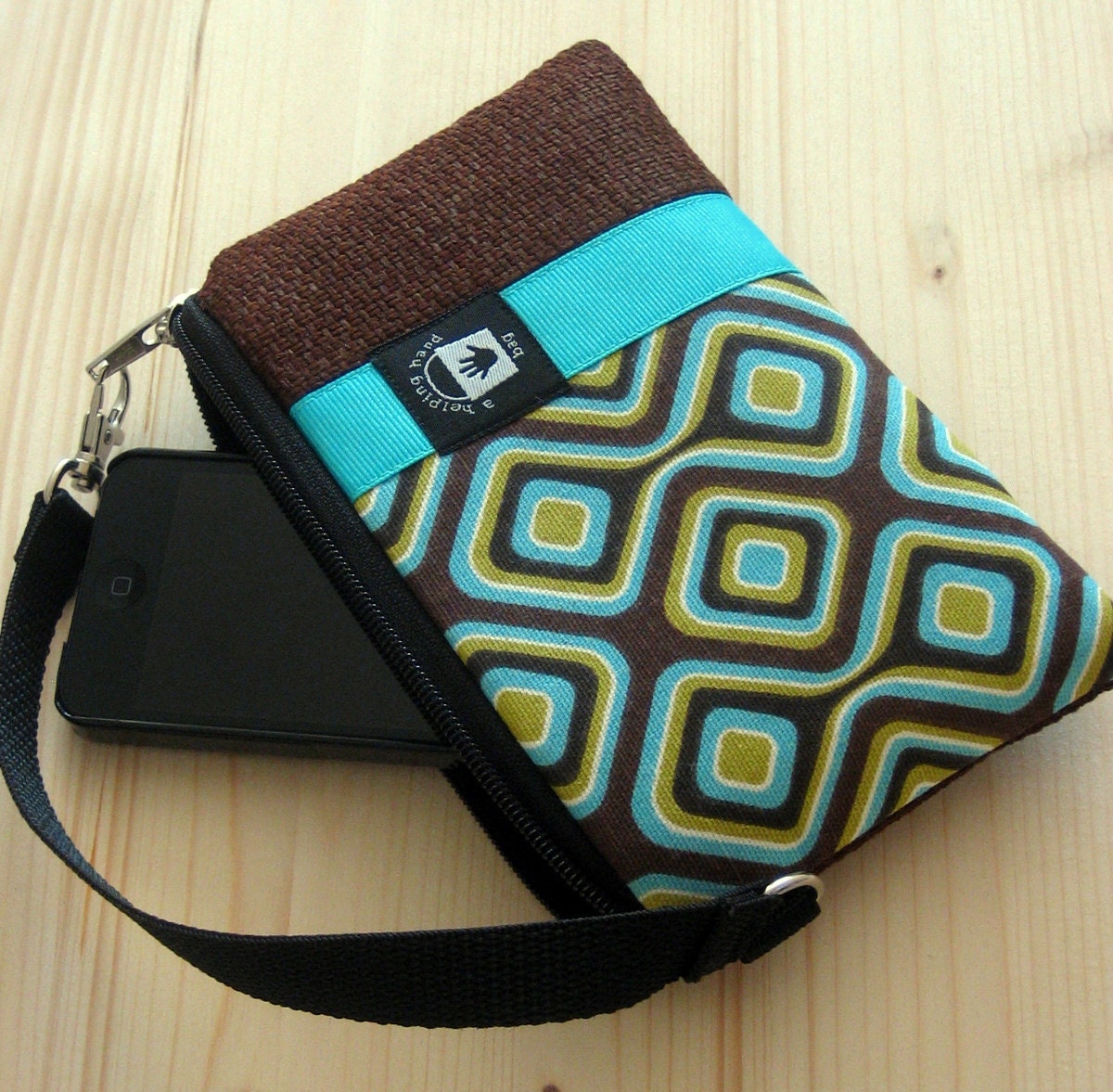
I go shopping and I can't find anything appealing. Even buying a bag is hard. They have fucking writing all over them.


Or not quite writing, but may as well be:

I want you to understand, that I'm not just saying this doesn't appeal to me, I want to express this accurately. If I didn't know better, I'd think this was a joke. It is so incredibly ugly, I would rather use a Wal-Mart grocery bag.

I am fully aware I'm in a minority, because I'm seeing ugliness everywhere I go just lately. If it's not the hideous patterns, it's revolting colours, or styles.

WHAT THE HELL IS THIS?

Yesterday Rhiannon and I did a craft show. We do not live in a high-trend area, not by any standards, so what I was seeing isn't "the latest look" and was probably quite tame, but I don't get out much, and so it was people watching paradise. We do actually have photos, thanks to Brennan who got bored and amused himself by taking hundreds of photos. But I think it would be quite wrong to show you the people I'm going to critique.

1. Ordinary looking woman. Brown short sleeved sweater, very boring actually, but teamed with a skirt that was 2/3 plain, and then had random patches of fabric attached round the bottom included pink fur, a piece of old knitwork, and a piece of denim that wasn't even square. I couldn't take my eyes off that skirt. I've seen nicer garments on crazy people who live in dumpsters.

2. Very tall woman, which accentuated everything. Very BEAUTIFUL woman, which added to my confusion. She wore a long tunic, quite plain, under which she wore two skirts of different lengths, some trousers with the widest legs I've ever seen in my life, and leather clogs. I've heard of the layered look, but I'm sure that's not what it means.

It wasn't just the clothes. I saw a buyer leaving with an old window frame, painted pale pink and with a bit of deep pink lace would round it in places, covered in chicken wire, and with about half a dozen multicoloured (and all different) bows attached to the wire. One was made from feathers. I couldn't invent that for a joke, I couldn't. My imagination isn't that deranged, and I'm not taking LSD for the sake of art. No.

Somebody pointed out to me today that fashion is art.

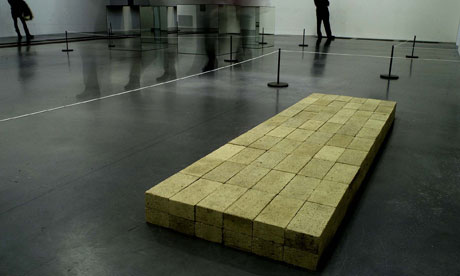
So is this:


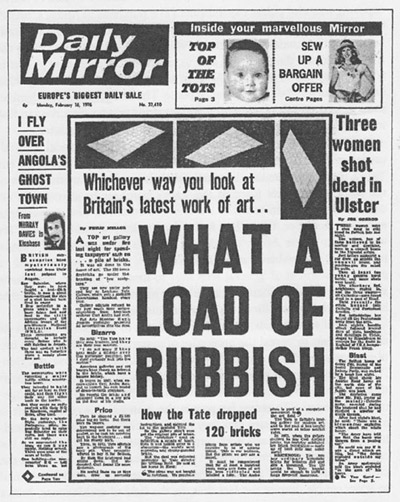
The infamous bricks in the Tate gallery in London, have come to symbolize art for art's sake. The gallery spent a small fortune on this, and the media had a field day.


Details here for those unfamiliar with the story: http://theartnewspaper.com/articles/Revealed%3A+secrets+of+the+Tate+bricks/23578

It's all very well saying that beauty is in the eye of the beholder, but doesn't there come a point where it's less about esthetics and more about...well, what is it? Is this an Emperor's New Clothes scenario, or something even worse?

Maybe I'm just a dreadful cynic but I can't help thinking that people's tastes can be groomed. That if I spilled some paint down my jeans, and tried to sell them for $1,000,000 as a piece of art, I'd be laughed at. But if they featured on a popular movie, that would just be the opening bid.

I believe a lot of what people say they like, or even sincerely believe that they like, is more to do with how they associate it. It looks fresh, it looks expensive, it looks classy, or whatever. What they've been told, in fact. Marketing. Marketing is just brainwashing.

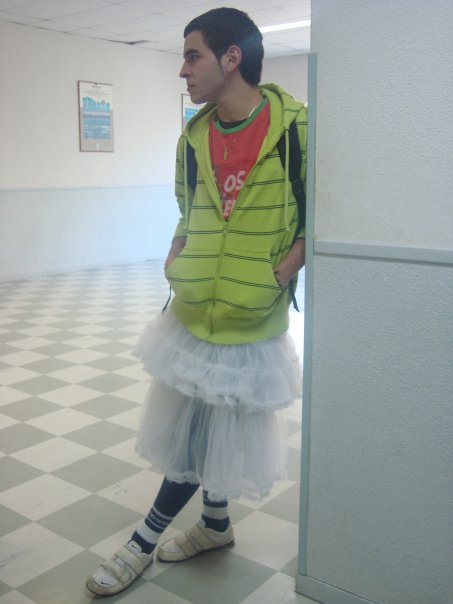
But people like being trendy. Whatever. I like what I like too. I still find it hard to believe anyone likes this:


No, I just don't believe it. Never mind the combination. Never mind the shape of the pants, how the hell can you like the design of that fabric?

I have a friend who is a saint. No, I mean it. When I was very rude about something she made yesterday, she understood, bless her. Except she didn't. It was only after the discussion among those who loved it that it all made sense (or didn't). People were discussing the length, the shape, the style, the colours, etc etc. No, that wasn't it. None of that. I'll come back to that, but it was interesting, again, being the odd one out. Not "getting" the trend.

Of course, I could just shut up and cash in on trends, which is exactly what people do, and I don't blame them one bit. When I sell jewellery I try to stay abreast of trends in taste...which is why I'm stuck with loads of oxblood beads after I believed the fashion pundits last year. They lied. My customers prefer purple.

And I think the same thing is happening to fashion as is happening to food. Food has trends. And right now it's all in the same vein.

See, the designers (of food and clothing) have completely run out of ideas. There is so much variety already, so many options, and so many trends running concurrently. What's the "in" skirt length? Anything. Anything goes right now. There has never been so much choice.

So chefs and designers are putting things together that don't go together. This was my issue yesterday with my friend's technically competant (and well-received) efforts. It was a combination of a geometric patterned hooded knitted sweater (something I would have to be close to death from freezing to wear in the first place) combined with sheer fabrics in stripes. In my head, these things do not go together, but what the hell do I know?

Taken to the nth..................no it already has been. There are no longer any limits. Neither in fashion, nor food.

"Darling you look FABULOUS in that burlap and pink gingham with fur trim, here, sit down and I'll fetch you a slice of raisin mackerel quiche, and a glass of bacon wine. Sit down on the tartan and paisley sofa, and I'll pull the green alligator skin curtains. I'm not happy with them. I think we need a swag over the top. I know, how about Houndstooth?"