Tuesday, 19 May 2015

Truth? You Can't Handle The Truth

Initially this post was going to be about Richard Dawkins. I'm still going to include him, and what brought him up, but I'm going to broaden it out to a phenomenon that's not new, but has become so easy these days, thanks to the internet.

Back in the olden days if one wanted to spread information it was quite the challenge. You could just talk to people, to save time you could build a podium in the park, or even rent a hall or something and talk to a lot at once. Or you could have leaflets printed, and if you had the right contacts, a whole book. There was no self-publishing unless you were very rich, and therefore far less people had the opportunity to share their views. Those that did could have tomatoes thrown at them but rarely did they get rebuttals apart from the occasional letter to the editor in the local rag.

Ah, but now it's so easy. Anyone can create a Facebook page, blog, or website and share any opinion they want with the entire world, completely free of charge, and better yet, their readers can argue with them. Freedom of information, the information highway, and all that.

No rules.

But plenty of peer reviews and fact checks. FREE SPEECH! Isn't it wonderful?

I have enjoyed the internet more than I can express. I first came online in early 1997 and I've never looked back. Learning? Right from the get go. People with different lives, different experiences, different views, all ready and willing to share.

And argue.


No sooner did we have the internet, we had trolls. What is a troll? It is a person who, often hiding behind the anonymity of the medium, engages in fights and name-calling for entertainment purposes.

Because my first social media experience was the religion forums at MSN, I discovered this very quickly, more on that in a bit, but it wasn't restricted to it. There was as much if not more controversy and spitefulness on the food, heath, gardening, and parenting forums. People can argue over anything.

One of the rules of debate is "no ad hominems". You can look that up if you're not familiar with it, as well as the other no-nos (slippery slope arguments, Godwin's Law, etc) but in a nutshell the ad hom, as it's widely known, is an insult. Instead of arguing your opponent's point you call him names.

It's common to the point of normal. I try with every fibre of my being to avoid it, but even I'm guilty of it when pushed. But it's a bad thing. It derails the debate. You see, a debate has to stay on topic or it degenerates. First it degenerates from a debate into an argument. And eventually it becomes:

"You're a troll"
"No, you're the troll"
"No, you are"
"No, you are"

And at this point, but for geography, they'd be throwing tomatoes at each other.

Anyway, time marches on and despite all the opportunities people have had to educate themselves online, today I was alerted to this:


It would be easy to ad hom all over this, and I confess to referring to it as psychotic dribble on Facebook. But let's be academic here.

This post contradicts itself. Early on it says "no such...active virus...has ever been found in rabid animals". Later it names the virus responsible. 

Here is a photo of said virus.


So, we are forced to accept somebody found it somewhere, presumably in a rabid animal.

The advice given to take Vitamin C for rabies is wrong, and obviously extremely dangerous.

We could return to ad homs very easily, because the writer really doesn't deserve to be taken seriously, but we must take this seriously, because this advice could be fatal. I can't think of anything more serious than an opinion that could kill.

To sum up, this post is not the truth. It is fiction, and it is dangerous fiction. How many people would believe it? Hard to say, but they are out there, because I've met them. The original post was on a site dedicated to showing the dark side of the anti-vaccination movement, but that's just one part of this sub-section of the population who distrust modern medicine, doctors, and pharmaceutical, and prefer instead to place their lives in the hands of a stranger on the internet.

How often does this happen?

Back at MSN I met a lady who did not believe in germs. Presumably she thought photos of such organisms were hoaxes, I really don't know, but for whatever reason in her mind there were no such things. All illnesses were caused, not by pathogens, but by what Jerry Coyne (we'll be seeing him later too) refers to as woo. I love that term and have stolen it. The original term was woo-woo, but the shorter version works well in compound words such as "woomeister". And yes, that's an ad hom.

Other people, famous people, people who make a lot of money out of it, dislike being told they are woomeisters, and refer to anyone who dismisses their woo a "bully".

So, it goes like this. If I publish a book that states that all humans could fly if they follow a few simple dietary rules, that would make me a woomeister. And if you said the entire idea was ridiculous, I could call you a bully, and go wah wah wah on TV somewhere.

But that's a very simple version. It is obvious to even most wooists that no amount of wholefoods will allow us to fly, and the book would not be a bestseller in the first place as a result.

What if I published a book of woo saying that vaccinations caused Autism? Despite the fact that the vast majority of vaccinated children were not autistic? Despite the fact that there are autistic children, in places where vaccinations are not available? Despite the fact that a genetic link in autism has been talked about for 50 years? And so on. Well, somebody did. And it did sell. And parents stopped vaccinating their children. Is that dangerous? Yes, of course it is. Should we allow it? We have to, free speech and all that.

What if I published a book of woo saying that when you have a tumour you should just pray, and not see a doctor? According to some sources, Val Kilmer, who is a Christian Scientist, ended up in hospital bleeding from the throat earlier this year for this reason.

What if I published a textbook of woo for schools saying that Earth is 6000 years old, and that evolution is not true? Does that do any harm?

So let's get to Dawkins.

This was the article that started all of this....please read it.

http://www.salon.com/2015/05/16/richard_dawkins_doesnt_give_a_damn_the_huge_mistake_hes_making_about_religion/

“I DON’T give a damn if people find religious belief comfortable or meaningful. I only care whether it’s true.”

Dawkins is not my cup of tea. He's a very serious man. I'm sure he smiles sometimes, maybe he even laughs, but I've never seen him really let his hair down, if you know what I mean. The word here is dour. I can't deal with dour people. I'm sure they are perfectly happy in their own way, but there's something missing there, that I need to be able to relate to people.

Dawkins is about the truth, the whole truth, and nothing but the truth. He has no time for anything else. And to a greater or lesser degree, there is a whole group of that type of atheist who share that attitude. These are usually learned men, often scientists, so I respect them on that level, and I too am a bit of a stickler for truth.

On the other hand, Sean Illing reminds us of an important point, that religion is not science. You can't argue the one using the other, they are too different. When science and religion are both seeking the truth regarding cosmology for example, the approaches used are opposite.

I'm not keen on religion. It's full of dogma and woo. I am very keen on love, beauty, kindness, art, creativity, music, and the human mind. And I find they are expressed best in philosophic and spiritual language rather than scientific, even if there is an altruism gene.

I have managed to find my own balance here, as I am wont to do, by sticking to truth where truth is available, and enjoying the mystery of the rest.

In some ways I agree with the writer of this article. These very strict atheists are missing the point. I wonder if it's a personality trait. When they listen to music, do they analyse it mathematically or just enjoy it?

One thing I have noticed is that they really can throw the ad homs around. That arrogance that geniuses tend to have seems to affect their manners. They justify this, or sometimes don't even bother, but it's still rude. And they don't care.

Maybe I'm just too soft. I just can't bring myself to hurt people's feelings over such an issue.

So where do we draw the line? Where is it OK to leave people to whatever they believe, just let them get on with it, share it, publish it, and argue it?

May I suggest a Pagan solution? If there's no harm in it, then leave them to it.

If your neighbour leaves little meals out for the pixies, who she has named, but she's otherwise a good person, there's no harm done. Leave her to it.

If she accuses you of poisoning her pixies, call social services.

The problem remains of course in defining harm. That has been a running discussion in my circles forever, and probably always will be.

I suspect that in fact, Dawkins, et al, use it as a yardstick themselves, they just have a different definition of harm. So, later in the week, I'll go into that aspect of it all in more detail.

Meanwhile, tomorrow we examine the word Belief. Again. More so.

The truth is, I have work to do, so off I go.

Friday, 15 May 2015

Won't You Join Me?

You know, there are two kinds of good people in this world. There are those who are all about peace and love, and there are those who are all about activism and fighting the good fight.

There's also this whackadoodle idea that you can't be both. Of course you can.

It's no different to those who think you can't be a friend and a parent to your child. Bollocks. I've managed it with all of mine. You just have to be a good friend, not an enabler. It's actually quite simple.

Then there's this nonsense that if a person isn't perfect then they are bad or wrong. But nobody is perfect, not me, not you, not anyone. So if you only vote for/marry/employ/socialize with perfect people, you're going to be out of luck.

We live in a both/and world, not an either/or world. You can be two things at once in all sorts of ways, and it's perfectly OK to take a middle line. That doesn't make you weak, or conflicted, it makes you balanced.

In so many arguments, I watch people paint themselves into a corner because they forget about compromise, and they just end up looking like idiots.

If you don't mind looking like an idiot, then by all means, carry on. If you prefer to sound reasonable here are a few words you might want to think about really carefully before using:

Always
Never
Can't
Certain
Impossible
Totally

Because there are always randoms thrown into the mix.

And as I've pointed out many times (ad nauseum, in fact) you can be a jolly, even silly person (raises hand), and also take important things seriously. Even switch from one to the other and back with ease. Even use humour to point out great injustice. Comedians are frequently modern philosophers.

It's all about balance, people. Not extremes. Balance is both healthy and useful. It's a sign of paying attention, because it means you've seen both sides of an issue. There always are two sides.

We have a situation all too frequently in social media where the opposite view is ridiculed and dismissed instead of being considered and discussed.

Ridicule and dismissal are easy. Children can do it. Dogs can do it actually (piss on it and walk away). It's the lazy way.

Listening and offering a thoughtful response takes more time and effort. So people don't bother, and as a result they don't learn, and they also do a great deal of harm.

I am trying my hardest not to go the ridicule and dismissal route, but to listen and offer a thoughtful response. I consider it the mature way. Sometimes it's difficult, sometimes it's really, really difficult. But I think it's worth it. I invite you to give it a shot.

Wednesday, 13 May 2015

Pragmatic Pagan Agnostic

About six months ago, I was asked pointedly about my beliefs.

"Melanie, you are always talking about what you don't believe, what you don't do, but you never say what you do believe in. You are critical of the beliefs of others, but you never talk about yours. This is sheer cowardice."

I dithered. I procrastinated. I balked.

I'll write about anything, and I'm not a particularly private person, but I didn't want to write this one. Unlike some people who declare their beliefs, loud and proud. I mean, you know the ones.


ETC


But I caved in. After too many assumptions and misrepresentations, I'm going to talk about my beliefs.

So.

I believe in love. I do not believe in sentimentality. Sentimentality is needy. Love is not needy. Love gives. I believe in kindness.

I believe in humankind. We have many faults, but they are overwhelmed by the incredible feats of selfless love we show over and over.

I believe in going with the flow, which some consider a "weak" approach to life. But I consider it a sensible one. Saves a lot of angst.

I believe in peace. In calmness, in tolerance, in give and take, live and let live.


There you go.

You wanted more? So, what more is there?

Oh stop rolling your eyes.

Yes, I know. Let's face the elephant.

It's no secret that I'm Pagan, by all current definitions, and it's also no secret that I don't follow any "tradition", such as Wicca or anything that has a name. I have no need for actual religion.

Ah, they say, but a collection of beliefs IS a religion. Well, if you insist. I have no book, no deity, no prayers, no ritual, and no statement of faith. Not much of a religion really is it?

Oh Melanie, you are cheating again. We're talking about spirituality.

Are you? Really? Because the last conversation I had with a devoutly religious person was about the homosexual "issue" and there wasn't much spitituality in it. And the last nice thing a devoutly religious person that I know did, was donate money to Nepal. And that was about as non-spiritual as it gets.

So many bits to the whole topic, aren't there?

God.

Let's tackle this one HEAD ON.

When I'm asked if I believe in God I never know what to say. Usually the person asking is Christian, and therefore what they are asking me is if I believe in THEIR God. The answer is no.

But if I say no to that question, it gives the impression that I'm an atheist. Which I'm not. So there. I just don't subscribe to the Abrahamic belief systems. They fascinate me, I study them, but I treat them as I do any other mythologies. The difference being, believers in Odin or Jupiter are not trying to run the bloody country...or tell me what to do.

I am not Buddhist, either, despite what some people assume. But I think I possibly approach the concept of God rather like Buddhists do. Or possibly not.

Which is to say I acknowledge something greater than the sum of the parts in the Universe. But not outside it. Or separate from it.

Or is a bit more Hindu? It's certainly Pantheistic. Whatever it is, it's everywhere. No, not IN everything, that's PanENtheism, (look it up) and it has limits. Pantheism has no limits.

What this means is that I totally oppose the idea of a Creator being separate from the Creation. For me it's the same thing. That means God didn't make the bunny rabbits, God IS the bunny rabbits.

Don't think I haven't explored this concept fully either. It's not a new idea, it's not new to me, and it's not.......new.

Or I am I totally deluded and this is all in my head? Who knows? Nobody knows. NOBODY. For that reason I'm also a dedicated agnostic. It's not that I don't know.....it's that I categorically insist it cannot be known. And I rather like that.

So, you either believe it or you don't, based on nothing more than feelings. No proof, no dogma, no nothing. Take it or leave it.

Works for me, and I don't expect anyone else to share it.


DEATH

Seems to me the reason many people cling to religious beliefs is that they fear death. I do not fear death. I fear dying. It can be slow, or painful, or both. It means you miss out on stuff you were looking forward to. But afterwards? Well, no problem then. Whether death is oblivion or something else, makes no difference, it will be whatever it is, nothing I can do about it, so I don't bother myself with it. Far worse than death is not living. I enjoy life. I believe the purpose of life is to live.

Do I believe in an afterlife? No idea frankly. This is where my strict agnosticism plays a key role. I don't know what happens after death and neither does anyone else, so I'll tackle that when the time comes.

Do I believe in hell? No. The idea is ridiculous, see my previous post.

Do I believe in heaven? As decribed by Christians etc, no. And if such a place exists, COUNT ME OUT. I don't want to go there. Eternal bliss? What is the point of that? How boring! Give me some excitement, puleeeze. Give me challenges, give me things to learn. Give me experience. Otherwise, forget it. Summerland? Yeah, if that's available, it sounds good. So long as there is plenty to do.......

Therefore if I get a choice, I'll take Box 3 thank you Bob. Reincarnation, another crack at life. That would work for me. Probably. If I'm as lucky next time around (got lucky this time).

I think I might enjoy being some sort of helpful spirit too, at least they have a job.

But none of this matters NOW. Now is for living. Now is for experience. Now is for love, and music, and people, and flowers, and cats, and butterflies. And hopefully I don't do any harm while I'm here. I try not to. On that topic.....

Morality

I contend that it's not connected to religion. Nope.

There are people who do better, morally, when under threat from religion, but that's quite another matter. That just shows they have no bloody self-discipline.

But the fact is, that if you studied every human on Earth and graded his morality, and counted it all up by religion, I guarantee you'd find that it makes no difference whether a person is religious, a bit, or a lot, or not at all as to how "good" they are. Priests and imams can be very, very bad. Atheists can be very, very good.

Not only that, the very definition of morality is wobbly and is often daft. A sin to show your hair? What bollocks is that?

No. If there's no harm, then there's no harm.

(Refer to my forthcoming book "Behave Yourself" for more details..)

In fact, a lot of things defined as "religious" in the area of "right and wrong and what happens next" is actually superstition, and I've discussed this before too so I won't repeat myself. I'm not interested in such nonsense. I have a high IQ and I use it.

So.....

The best quote I've EVER seen on this topic is as follows:

"Live a good life. If there are gods and they are just, then they will not care how devout you have been, but will welcome you based on the virtues you have lived by. If there are gods, but unjust, then you should not want to worship them. If there are no gods, then you will be gone, but...will have lived a noble life that will live on in the memories of your loved ones."

And now you know. That's where I'm coming from. Lots of shrugging, lots of dismissal of silly things, but yes, I'll still continue to argue over fine points of theology with anyone, the moment I see anybody being harmed by religion. You can count on that.


Thursday, 30 April 2015

Hell

Topic du jour. We've been a bit flippant about it over HERE, but let's cover this in a bit more detail.

Let's begin by stating upfront that I do not believe in hell. Therefore it's easy for me to be flippant about it. If you do believe, and most especially if you fear it, I understand that my joking around could be a little uncomfortable. I can set your mind at rest in one of several ways.

Some sort of place where people go when they die, an otherworld or indeed underworld, is written about in all holy books, but we're going to concentrate mainly on The Bible, because it's the book you are likely to be most familiar with, and because it is alleged to be the origin of the firey pit of eternal torture. Like my esteemed friend (see link to her blog above) I have read all of them, but I understand that's uncommon. (It is however, a very good idea, and I recommend it.)

The Bible is not a single book, of course. It is a collection of many writings from a wide time span that were agreed upon by a committee. That should be enough to suggest that there could be a flaw or two involved, but believers don't seem to have a problem with that. That there were many other old writings from that area doesn't bother them, they assume the excluded ones were fakes of some sort, I guess. That some of the included ones are difficult to understand doesn't bother them either, they just ignore those.

For she doted upon their paramours, whose flesh is as the flesh of asses, and whose issue is like the issue of horses.

But let's call it "a book", what is it a book about? Well, in the case of the Old Testament it's some creation myths, some advice to a small tribe on how to behave, and a lot of folk tales that amount to land claims for them. There are sprinklings of history, but much of it is inaccurate, and there's a lot of political commentary about the neighbours. Satire.

Myths. There is nothing wrong with mythology. It is the rich background to all classic fiction. When I first discovered the internet in 1997 I made a spectacular entrance to what was then one of the world's main social media hangouts (MSN) by announcing that the Bible was mythology. I thought everyone knew that. Ah. Being a bit "new" I had never met any religious fundamentalists before. The backlash was a bit like a tsunami, but I learned fast!

I stand by that statement, by the way. In the last 18 years I've caught up on my religious education, and nothing has changed. I am just less gauche when I discuss it. I know it's your holy book, but it's not mine. Respect? Yes, I respect all ancient writings, who wouldn't? Take it as read? No.

I know some of you think the Bible is "God's word" but you can never explain why I should accept that. Therefore I don't. Some of you don't even like the idea that it was written by lots of different people, humble priests etc, and not those whose names appear on the book. They were good writers, by the way.

No. Hell doesn't exist even though some ancient writers say it does, any more than the river Styx does. These are symbolic. That's the whole point to mythology. The message in the story is what counts, you aren't supposed to take it literally.

But I know some of you still do believe that the Bible is the inspired word of God, and that God even took a hand in seeing that only the right books got into it. Yes you say, it was written by men, and collated by men, but God was in control. I really think he could have done a better job, frankly. The problem is that it's often not quite clear what it means, and becomes a matter of interpretation. Each group of people who interpret it their way believe they are right and everyone else is wrong.

I do not believe that the Bible is The Word Of God, or is any different to any other collection of mythology, and therefore what it says about hell is completely irrelevant to me. 

For those of you who do, however, interpretation remains the key.

Thankfully many theologians have studied this in great depth. Literal readings of the text are no longer mainstream but relegated to the fringes of fundamentalism, or to put it another way, those who are more into the supernatural. Yes I used that word. I'm going to used the other one in a minute, but let's begin by pointing out:

Fundamentalists/literalists vascillate between requiring things to be natural, and demanding that others believe in the supernatural. 

But more to the point they are superstitious. Bad things will happen to you if you do X. And so on.

Not all religious people behave like that. Not all Christians are literalists. And those I admire and respect are not superstitious at all. They are quite reasonable, in fact, and have looked at this mythology and found value in it, and see it in a quite different way. For this reason the superstitious ones look down on them. See them as "not real Christians" or not Christians at all.

For this reason I think of them as the Superstitious Elite.

So what I'm going to explain next will be of zero interest to these people. They'll probably say "Even the devil can quote scripture" (I've heard it all). But for those of you who are unaware of it, real theologians, people with the ability to read old books and understand what the writers meant, have conclusively proven that the Bible does not talk about hell at all.

What?

Oh and yes, I said "real theologians". If the SE can dismiss sensible Christians as not real, we can all play that game. I also said conclusively proven, it's another claim the SE like to make.

Anyway, here's the skinny.

Show me where the Bible talks of hell and I'll show you where it doesn't, actually. Let's get Sheol out of the way immediately. Sheol means grave. Always did, never meant anything else. But it doesn't mean a specific grave, as we might think of it today. A single hole. No. This is a poetic word. Not only that, it was deemed to be where everyone went after death. You could think of it as "the afterlife" and indeed the Greeks translated it as Hades, from their own mythology, and the comparison between the two was therefore made. On a supernatural level it could be seen as the spirit world. It had a connotation of under the ground, somewhere dark. But it wasn't hell. That idea came much, much later.

It really isn't difficult to see how graves and dark underground worlds of spirits go together in the imagination. Think of your classic zombie tales, as they clamber out of the ground. Ghosts haunting graveyards. But this is all superstition, supernatural, mythology. Not real.

Then there's Gehenna. It is a real place. It's real name is Gai Ben Hinnom (the Valley of the Son of Hinnom) and here's a photo of it.


Terrifying, isn't it? It's in Jerusalem, and does actually contain a lot of tombs, so it is a bit of a graveyard, but it was used for other purposes in Bible times, including being a general crematorium and landfill. It really isn't much of a stretch to see how the name of this place was used symbolically to represent a concept much like the modern idea of hell.

We do it still. "Hell on earth" we say, when we describe a war zone or natural disaster. Humans still use symbolic language even after all these years. Fancy that.

So, apart from these obvious mistranslations/misunderstandings, where else does the Bible mention hell? Well, actually it doesn't. That's it. That's your lot.

The entire idea of an eternal pit of fire being a place of suffering for the wicked came later, based on all sorts of mythology from various places, but...it's not Biblical. Actually.

As I'm not a believer, you don't care about me saying that, right? But I didn't do this research. Solid modern Christian theologians did, I'm just reporting it for you.

So, next time you tell me I'm going to hell, I'll be checking out the real estate in Jerusalem, might even get my own olive tree.


Monday, 6 April 2015

Gender Identity and Fashion

I had very positive responses to my post "http://chovblog.blogspot.ca/2015/04/do-this-wear-that-stand-there.html" with one exception. A total stranger, well to me anyway, a friend of a friend, read it and contacted me with an objection. This is my response, which I hope is sufficiently explicit that it may change their mind.

When we are born and the nurse says "it's a girl!" or "it's a boy!" suddenly all sorts of decisions are made for us. They are made with every good intention, and if they are not made - those rare few parents who deliberately and methodically raise their child with no gender expectations at all - it is considered anything from a bit odd to dangerous.

So before we go any further, let's define gender.

  1. Gender is the range of characteristics pertaining to, and differentiating between, masculinity and femininity.

Well, that got us a long way, didn't it.

OK, let define feminine:

fem·i·nine
ˈfemənən/
adjective
  1. 1.
    having qualities or appearance traditionally associated with women, especially delicacy and prettiness.
    "a feminine frilled blouse"
    synonyms:womanly, ladylike; 
  2. 2.
    GRAMMAR
    of or denoting a gender of nouns and adjectives, conventionally regarded as female.

I have highlighted in red the parts that jump out at me here. But before we get to that, let's look at masculine.

mas·cu·line
ˈmaskyələn/
adjective
  1. 1.
    having qualities or appearance traditionally associated with men, especially strength and aggressiveness.
    "he is outstandingly handsome and robust, very masculine"

  2. 2.
    GRAMMAR
    of or denoting a gender of nouns and adjectives, conventionally regarded as male.
noun
  1. 1.
    the male sex or gender.
    "the masculine as the norm"

Oh dear. Sorry about the aggression there guys, blame the dictionary, not me. Anyway, we'll come back to those traits in a few.

I'd like to begin with this matter of "tradition" and "convention". I'd especially like to examine how much of that is nature and how much is nurture.

Perhaps we can't judge by my own experience, because apparently I'm in a minority. My mother was a tomboy at a time when it was positively frowned upon, and she raised me following any and all clues I gave rather that trying to impress anything upon me. I was a tomboy, and I raised my girls following the same method. I did not get tomboys. I got girls who happily did a wide variety of things not exactly associated with delicacy and prettiness (digging in the dirt and playing Hot Wheels) but then they had an older brother. Neither of them were what anyone would call tomboys, however.

We can't judge by this, whatever it tells us, because it's just one example of family dynamics, and the world is too big and too varied for that. But I must always be honest in my own background when discussing this, because I am obviously biased towards NOT encouraging gender roles in children. I think it's silly, apart from anything else.

No, what's important here is asking do they even exist? And if they do, how much effort should parents make in steering children towards them, or away from them.

Children vary very much in their level of "headstrongness". Some girls, raised by parents who desperately want her to be the epitome of femininity, will be tomboys no matter what. And some girls, raised by parents who are radically opposed to gender stereotypes will get a princess no matter what they do. You can put a girl in a pretty dress but you can't always keep her out of a tree.

On the other hand, some children are meek and malleable, at least at first, and can be easily persuaded to follow any path they are put on. Sometimes this can lead to problems later on, but nobody is aware of that at the time.

One thing is for certain, while tomboys may be a minority, they aren't rare. Everybody has met at least one, probably several. And let's get one thing right out of the way. This has absolutely no relation to that child's gender identity as an adult, nor her sexual orientation. You don't have to take that from me, the data is available from multiple studies. Tomboys are no more or less likely than princesses to become lesbians, or to be transgendered. It would seem connected, but it's not.

In other words, "allowing" a girl to be a tomboy is not going to do any harm. Moreover it will allow her to explore her own interests and grow up mentally healthy.

All of the above applies to boys of course, just change the relevant words.

So why do we even have gender expectations? Well, because biology. Biology is not sexist, it just provides the means to reproduce. Women have the equipment to carry babies, and men have the equipment to fertilize eggs. With technology, that may well change in future, but for now, that's really the key difference between us.

And before modern times, before contraception, especially, women had lots of babies. And this kept them busy. Raising children is time-consuming, even when you have extended family to help. It made perfect sense, therefore to let the men provide the food etc, while the women raised the children. It isn't the only possible arrangement. Other species have other arrangements, in many species the mothers are left to do everything by themselves, in some the parents share the work equally, and some the males are heavily involved. Among humans there have been variations too, but in general that's how we have found it convenient.

But if you were to go back in time and meet those women, you wouldn't find them to be delicate flowers, I assure you. The only princesses in those days were...well...princesses. And even some of those were pretty feisty. Women worked hard, they were as tough as nails as a result, and would put many modern men to shame.

Not only that, they often ran farms or worked from home in various crafts and services, and those who were childless or otherwise free were just as likely to wield a sword or a spear as any man. Biology doesn't say a woman can't be a huntress, it just says sometimes she doesn't have time. Don't even be fooled by size. Think again of animals. The female of the species is often the most fearsome, especially when guarding her offspring.

So, biology is responsible for reproduction, and therefore the hormones that go with it. Much is blamed on hormones, and this is where we come to the aggression. Testosterone, huh? Makes men big and strong, and sometimes they behave badly. Aggression has its uses, it also has its downfalls. It can for example lead to bad decision making, rage, and violence, for all the wrong reasons. Is testosterone responsible for this aggression then? Well, no. It certainly affects risk-taking behaviours, but it's now believed that the male version of estrogen, estradiol, has more impact and that in fact in many cases men with low testosterone are more aggressive. Hmm.

So, what does estrogen do to women then? Probably not what you think. It affects mood, and this is well known, but the critical factor here is in balance, rather than quantity. Fluctuating levels of estrogen are what cause the problem. Not only that, women have testosterone too.

Hormones are extremely complex and so are their effects. We are quick to blame them, but much of the time the impact they have on our personalities and behaviour is only a small part of the story. Compared to the effects on our physiques, it's really not much.

All humans have moods and reactions to outside stimuli. Their response - to cry or to lash out - is more to do with individual traits, upbringing, and "balance" than it is to do with hormones. More and more as we study this carefully we learn that our brains are really quite similar.

What about that right-brain, left-brain thing then? Well, it's mostly bollocks.

https://www.sciencebasedmedicine.org/left-brain-right-brain-myth/

In the end, everything boils down to conscious choices, based on the options that are open to us, or those we think are open to us. Aggression, in either gender, is often caused by simply not being able to respond appropriately. Some women, suffering from PMS, will weep privately, some will slap you, and some will alternate between the two. Men often deride this or fear it, but they have their fair share of irrational behaviour, so they have no room to talk.

So, what's this "delicacy" that is feminine then? I think it all stems from women simply being smaller than men. On the whole, that is.


Let's be honest here, for every example that fits the stereotype there are plenty that don't, and we are really, in the end, just who we are.

OK. Going back then, to expectations. What is "feminine", in the ordinary modern daily meaning of the word?

RIGHT! I've got to stop you there! You are already thinking of clothing. Yes, you are. I caught you.

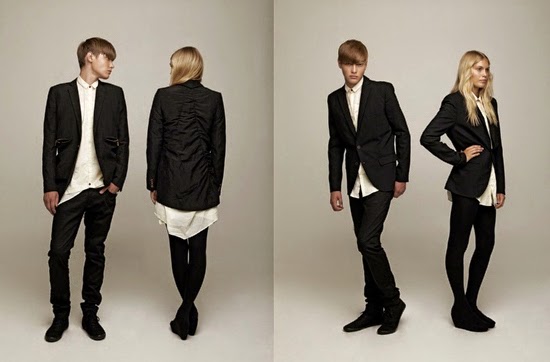
Stop it. Absolutely every single example you can offer of "feminine" clothing has at some time or other in history, somewhere in the world been worn by men. And vice versa. That is only fashion, with emphasis on "only". It's minor, unimportant, and silly. You may well enjoy it, and there's nothing wrong with that, but taking it seriously is absurd.

And as I've said many times before, it's potentially dangerous. I hate to repeat myself but this is "only" fashion:


Before I get into trouble for picking on Islam again (I get into trouble for picking on everyone, so I think I'm probably not picking on anyone), here's another example.


These are all silly. OK? If they are chosen by the wearer, that's her business, but it doesn't change the silliness of it. Clothes are supposed to serve a purpose, some of which is visual, and many people actively like to look good in what they wear. That is not something that can be "rated" although we try ("it suits her" "that's not her colour" "it doesn't fit" "I prefer X to Y") it remains subjective. But either appearance is important or it isn't. You can't have it both ways. 

One of the purposes is identity. That's why we have uniforms, etc.

Oh shit, there's a policeman. 
Don't shoot him, he's wearing our colours.
Quick, pass the ball to a teammate.
Are you a member?
All students will wear the house tie.
Sorry sir, we have a dress code. 
Free drinks for the bridal party only.
Actually, I don't work here.

At some point in time, somebody decided that men should dress differently to women. There are practical matters involved, including who can pee standing up, and we are different shapes, but it isn't really necessary for practical purposes. 


Nor haute couture


And I bet you can't even tell me if this model is male or female


(That's Rain Dove, by the way, and she's a girl.)

More importantly, does it matter?

Well, it matters to some people. I invite all transgendered people reading this, for example to think about the clothes they wear. When a person identifies as the opposite sex to that which they were born, one of the things they do is change their clothes.

I got into a very heated argument one day with a transvestite. A heterosexual man, with no desire whatsoever to identify as female, but who liked to cross-dress. He liked to wear women's clothes. Nothing wrong with that. He liked to "feel feminine". So, as a woman, and a tomboy, and a pain in the arse, I asked him what that felt like....it went on a long time. We talked past each other. We argued over definitions. We ended up never speaking to each other again - seriously - he was so offended that I dared question "femininity" at all. At one point he said I had no idea what I was talking about.

Maybe I don't. Maybe you can only recognize these things from "outside".

But ultimately, if you are going to be honest, you have to admit it's "only" fashion, and that it changes. What women wear and what men wear, may or may not be decided by the wearer, but somebody is deciding it, and yet it most certainly isn't written in stone.

Even in the Quran, where it is recommended that clothing is modest (with no real definition of what that means) that has led to the cultural practice of wearing anything from a headscarf to a tent, and where it strongly admonishes wearing the clothes of the opposite sex, nowhere does it say what those clothes are. Look it up if you don't believe me.

The Bible is similar in many ways, but it goes into more detail. Specifically it admonishes mixed fabrics, braided hair, and gold jewellery. Yes, quite. How about headwear and veils. Ah, well.....men should take their headwear off, women should put theirs on. That much is still current in some churches too. But why? Fashion.

It's all only fashion, and words like tradition and custom are euphemisms for fashion, sometimes fashion long since died out. Some of it is retained in religious ceremonies, some in extremist religion generally, and it is an anachronism, with no solid ground whatsoever.

Outside of religious devotion, as I said, it just becomes silly.

So, let's ask again, what is feminine? If you say that you know it when you see it, congratulations, you have been encultured. The choices of clothing, behaviour, and perhaps even careers, decided upon by total strangers, based on their enculturement, has been passed on to you. None of us are immune to this, by the way, it's impossible to escape what you've been taught. It is, however, possible to question it, to hold it up as full of holes, to rebel against it, and to refuse to have any part in brainwashing the next generation.

If you are a girl, and you like all the things aimed at girls, power to you. There is nothing wrong with that. But like any and all decisions you make, just be sure it's your own decision.

Wednesday, 1 April 2015

You Are What You Eat - And In Your Case It's Crow

This is almost a food blog, but I've brought it here for a wider audience because it actually applies to so many things.

There is something that pisses me right off. You know me, I only take serious things seriously, and I laugh about everything else. In between is a small but annoying category of stuff that isn't important enough for anger, but it's not funny either. It includes

 The Born Again.


No, not those ones. They behave just the same though. They preach at you.

I'm referring to those people who until recently have shoved everything into their faces without consideration of quantity, quality, nutrition, calories, or even poison. They not only ate whatever they felt like, but bragged about it, and then one day they had a sort of epiphany.

Maybe they gained weight.
Maybe they got sick.
Maybe their teeth rotted.
Maybe they couldn't afford it anymore.
Maybe they just grew up.

Whatever the reason, and I'm sure there are others, they suddenly decided to eat very differently.

The sensible thing to do would be to cut down the quantity, and reduce or cut out the obvious junk, maybe add some more fruits and vegetables, and lower the sugar and salt.

But there's no sensible going on here. In fact, they go stark raving mad.

I have actually, first hand, seen people go from McDonald's to organic vegan without passing GO.

I think that's a bit extreme, but of course it's absolutely none of my business, and if they shut up about it, then when I happened to run into them shoving down a bacon breakfast sandwich in Tim Horton's I wouldn't look quite so shocked, now would I?

Instead of quietly changing their habits, they make a song and dance about it. A huge production in fact, including endless social media reports on their new diet. DRAMA. DRAMA, DRAMA. Attention seeking crap.

I am happy for them if this is making them happier. Jolly good. How could I not be?

It's when they start the preaching that I get annoyed.

They completely forget that I was the person they told "I'd never touch wholegrain bread, it's full of bloody birdseed!" Now they are telling ME, unsolicited, that I should be eating quinoa.

They wouldn't listen when, after they complained to me about chronic digestive issues, I tentatively suggested considering changing the way they ate. Too obvious at the time perhaps. I got told I didn't know what I was talking about. Now they are claiming to eat "clean food". You know, I never knew mine was dirty.

When they asked me where I got all my energy from, I never said "I eat well" because I thought it was too provocative. But they didn't think twice about lecturing ME about protein intake. They weigh the stuff, for pity's sake.

To be perfectly honest, they are being downright rude. Something I have always tried to avoid. Doesn't seem to work the other way around.

So, this is an open message to those of you who have climbed aboard some new dietary bandwagon.

GOOD FOR YOU.

Now shut up.

I've been eating good food since the day I was born. Yes, I was lucky. Have I ever ranted at you about it? Did I ever nag you over your choices when they were bad? No, I was tactful. So, do me a favour and get on with it quietly.

Oh, and by the way, Hitler was a vegetarian.

Good Night!

Do This, Wear That, Stand There.


You may have noticed a post I shared on Facebook yesterday about a store clerk who made a little girl cry because she was looking at boys' suits. 


This woman went on to say it was child abuse to let her cross-dress. Comments after I posted that were all supportive of the child, and of freedom of expression in clothing, and many were, like me, tomboys as children too. I've already written about this several times:


And related issues, and I may or may not repeat myself here, so if you are a regular reader, forgive me, if not, catch up. 

Right, so what is really going on here? I think we have long established that gender identity, sexual orientation, and clothing choices are three different things, but there's another matter involved in this entire charade, and that is social conformity. 

People conform for a variety of reasons. Habit. Fear. Bigotry. Kindness. I think you'll agree these are all quite different, so conforming in and of itself isn't "bad", it all depends on why you are doing it. If you choose to conform yourself - for whatever reason - that's entirely your business. It is one of those choices you are free to make, and may it always be that way. 

At the same time it is vital that we allow people not to conform, and give them exactly that same freedom. 

Conformity is a very primitive urge. As much as we think we are so civilized, enlightened and progressive, these primitive urges are deep in our DNA, and we have to deal with them sometimes, as they can cause problems. So, in most modern societies there are lots of choices open to us and these are encouraged. But every so often conformity is demanded. The school uniform debate is an excellent example of this. If you've never been part of that debate you have missed some fascinating insights into the psyches of ordinary people. 

I think it's a good idea to reflect on our own reasons for doing seemingly very ordinary things. Sometimes, if we are honest, we realise we are doing them for really quite peculiar reasons. Sadly, most people don't bother to think. They live mostly automatically. They allow others to influence them out of sheer laziness. Sometimes it is just easier to conform. 

Out of all these things we have choices about, some create more controversy than others. Non-thinking people think it is a given that others will agree with them, and seem to be taken by surprise when they don't. In the example at the beginning of this post, part of that store clerk's problem was "shock". She has obviously not mixed with freethinkers very much. 

We aren't able ask her why she thinks that cross-dressing is harmful. We can guess that she associates it with something adult and sexual, because that is the usual reason. So you know where her mind is going. Furthermore, we can guess that she associates it with gender identity, and then sexual orientation, both of which are not necessarily relevant even when it is an adult in question. It's certainly not relevant in a child. 

We can probably guess, in fact, that this woman is homophobic, and the chances are that it is for religious reasons. But we must not assume this, because these guesses are potentially as bad as the assumptions she is making herself. That said, the chances that she's a bigoted homophobic fundie are far greater than the chances this little girl will continue to wear boys' suits as she grows up, let alone anything else. Kids have phases. 

What she didn't say, surprisingly, which I've heard many times, is that it's "not natural" for girls to want to dress as boys. If you read the link to my previous post, you will see that the whole idea of what constitutes male or female clothing is based purely on the whims of fashion. 


Eating cooked food is not natural.
Driving a car is not natural.
Wearing clothes is not natural.

Natural has nothing to do with fashion. Nothing. Natural isn't necessarily even "a good thing".

Cyanide is natural
Volcanoes are natural
Rabies is natural

And, naked is natural. Hear that? This is so obvious it shouldn't even need to be said, but the people who have it in their heads that the fashion in the western world in 2015 is somehow normal need to be reminded of this. Do me a favour and remind them every chance you get.

But I'm not finished. This is a part of a bigger problem, and you know what that is. Discrimination by clothing is possibly the most ridiculous discrimination of all.

It is particularly ridiculous because women can't win. We can't. If we dress the way men like, then we are to blame if we are sexually assaulted. If we dress the other way, we are accused of not dressing like women. This is not accidental either, it's all part of patriarchy. Control what women wear and you have yet another way to control women, right? It makes no difference that some of the loudest critics of what women wear are women. They have been successfully brainwashed.

And of course, the younger you brainwash them, the more chance they will conform.

I am happy to be living in these times when women are fighting back.


I am not so happy about the backlash coming from the right-wing. They fear that men are losing control, and they want that power back. There are many ways.

We all know one of them:


In the west it's usually far more subtle. Demands on what women wear are done in such sneaky ways most women miss it. And most men just don't get it. Sorry, but it's true. Even the best men, those who are totally supportive really don't understand. Try this:

“What if all women were bigger and stronger than you? And thought they were smarter? What if women were the ones who started wars? What if too many of your friends had been raped by women wielding giant dildos and no K-Y Jelly? What if the state trooper who pulled you over on the New Jersey Turnpike was a woman and carried a gun? What if the ability to menstruate was the prerequisite for most high-paying jobs? What if your attractiveness to women depended on the size of your penis? What if every time women saw you they’d hoot and make jerking motions with their hands?
What if women were always making jokes about how ugly penises are and how bad sperm tastes? What if you had to explain what’s wrong with your car to big sweaty women with greasy hands who stared at your crotch in a garage where you are surrounded by posters of naked men with hard-ons? What if men’s magazines featured cover photos of 14-year-old boys with socks tucked into the front of their jeans and articles like: “How to tell if your wife is unfaithful” or “What your doctor won’t tell you about your prostate” or “The truth about impotence”? What if the doctor who examined your prostate was a woman and called you “Honey”? What if you had to inhale your boss’ stale cigar breath as she insisted that sleeping with her was part of the job? What if you couldn’t get away because the company dress code required you wear shoes designed to keep you from running? And what if after all that women still wanted you to love them?”
~ For The Men Who Still Don’t Get It, Carol Diehl

Alas, it'll only be read by those who care, and some of those still won't really get it.

I don't expect there will ever be a time when all people will be open-minded about the choices others make, because the conformist attitude is, apart from anything else, a personality type. But I do believe that for some people it's a question of education. Of being exposed to more non-mainstream people, to be encouraged to think about these issues and why it matters.

Let me be perfectly blunt here. You, whoever you are, sit somewhere on the scale of conformity, because we all do. Nobody is at zero and nobody is at max. There will always be people who conform more or less than you do, and if it is a long way from your position, you may have difficulty understanding it. As I have said many time, it's OK not to understand, and it's especially OK to admit it. It's not OK to be spiteful in your words, or to discriminate based on not understanding something.

You see, chances are, you're wrong. Because nobody really knows what's right in these matters, because they are all just a matter of opinion.